Pallet Rack Beam Capacity: How Load Ratings Are Calculated
September 2, 2026
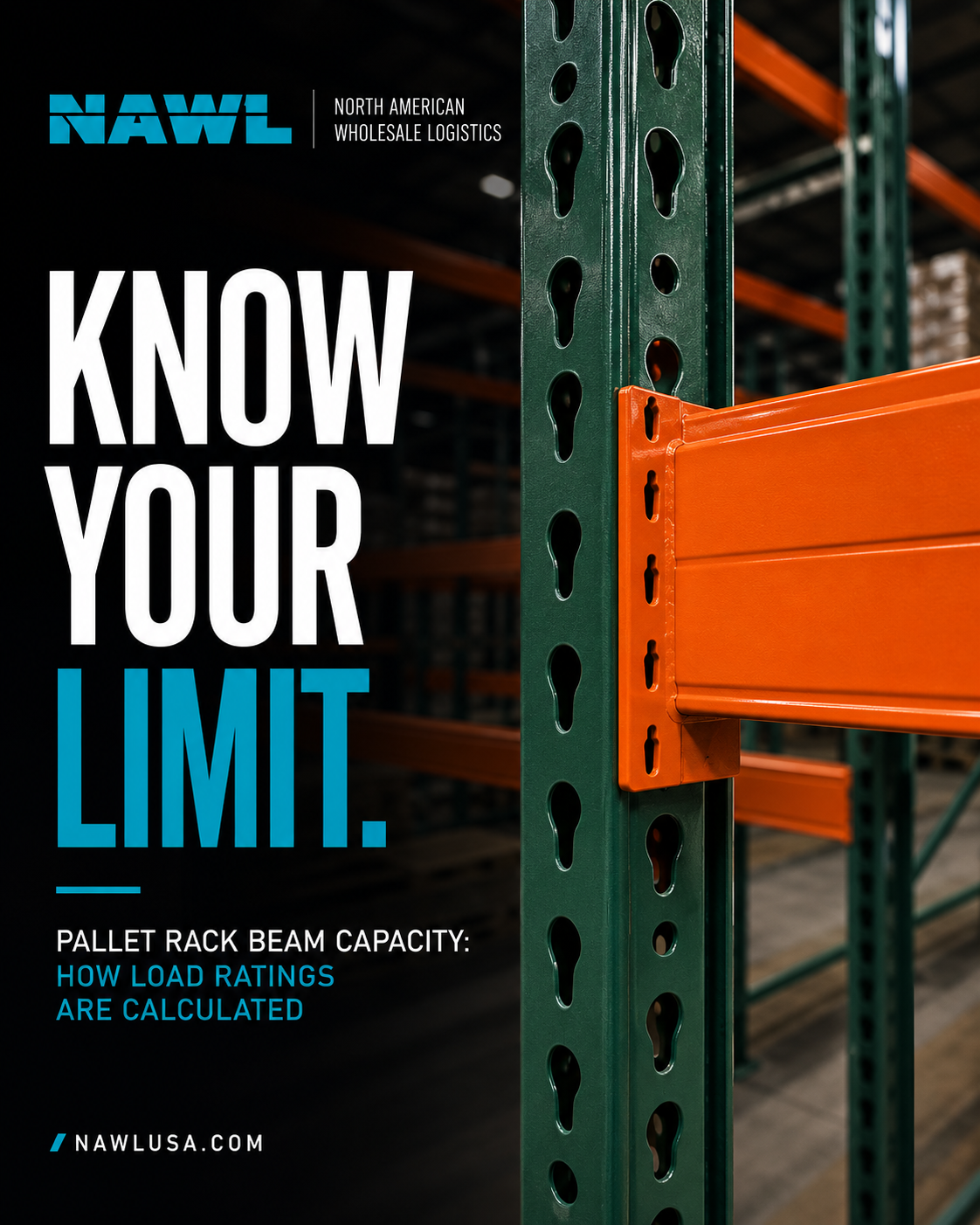
Every warehouse manager knows that the structural integrity of their pallet racking system is non-negotiable. At the heart of this integrity is the pallet rack beam capacity. It dictates how much weight your beams can safely support, directly impacting worker safety, product protection, and operational efficiency. But how are these critical load ratings determined? This isn't guesswork; it's a precise calculation rooted in engineering principles and industry standards.
At NAWL, we don't just sell Products; we provide robust, reliable storage solutions. Understanding the methodology behind beam capacity ratings empowers you to make informed decisions for your operations, whether you're optimizing an existing warehouse in Dallas or planning a new facility. This post will break down the key factors and calculations involved in establishing a beam's safe working load.
The Anatomy of Beam Capacity
Beam capacity isn't a single, fixed number for a given beam profile. It's influenced by several critical factors, primarily the beam's material properties, geometric dimensions, and the way it's supported and loaded. The ultimate goal is to prevent two types of failure: structural collapse (strength) and excessive deflection (serviceability).
Material Strength and Design Standards
The fundamental starting point is the yield strength of the steel used to manufacture the beams. This is the point at which the steel will deform permanently. However, a beam is never designed to operate near its yield strength. Industry standards, such as those set by the Rack Manufacturers Institute (RMI), govern the design and testing of pallet racking. These standards specify minimum material properties, welding requirements, and testing protocols.
For example, RMI's "Specification for the Design, Testing and Utilization of Industrial Steel Storage Racks" provides detailed guidelines. When you see a beam capacity rating, it has been calculated and verified against these rigorous standards, often involving physical load testing to confirm theoretical calculations.
Factor of Safety: Building in Protection
One of the most critical concepts in structural design is the factor of safety (FOS). This is a deliberate overdesign to ensure that the structure can withstand loads significantly higher than those expected in normal use. It accounts for uncertainties in material properties, manufacturing tolerances, potential overloading, and dynamic loads.
Typically, for pallet rack components like beams, the FOS against static yield strength is at least 1.65. This means that if a beam is rated for a 5,000-lb load, it should theoretically be able to withstand 5,000 lbs x 1.65 = 8,250 lbs before permanent deformation, and significantly more before ultimate failure. This margin is essential for safety, providing peace of mind and protection for your inventory and personnel.
Deflection Limits: Maintaining Serviceability
While strength prevents collapse, deflection addresses serviceability. Deflection refers to how much a beam bends under load. Even if a beam is strong enough to hold the weight without yielding, excessive bending can cause problems:
- Difficulty in pallet placement/retrieval: A significantly bowed beam can make it harder for forklift operators to maneuver pallets, potentially causing damage to inventory or the rack system itself.
- Perceived instability: While not necessarily unsafe, a visibly sagging beam can cause concern and appear unstable.
- Component wear: Excessive deflection can put undue stress on beam connectors and uprights over time.
For these reasons, RMI standards also specify deflection limits. A common limit is L/180, where 'L' is the clear span of the beam. So, for a 96-inch beam, the maximum allowable deflection might be 96 / 180 = 0.53 inches. The beam's capacity rating is often limited by this deflection criterion, meaning the beam could technically hold more weight before yielding, but it would exceed the acceptable sag limit. The lower of the two (strength-limited or deflection-limited) becomes the published capacity.
Load Distribution and Number of Pallets
Pallet rack beam capacity is always given per pair of beams and assumes an evenly distributed load. For instance, if you have two 40-inch-deep pallets on a pair of 96-inch beams, the load rating assumes the weight is spread across the beam length. Concentrated loads, such as a very heavy, small item placed directly in the center, will stress the beam differently and may reduce its effective capacity. Always strive for even load distribution.
When loading your beams, consider the weight of each pallet and the number of pallets per beam level. If a beam pair is rated for 5,000 lbs, and you plan to store two pallets per level, each pallet must weigh no more than 2,500 lbs. If you're storing three pallets, each must be under 1,666 lbs, and so on. Always refer to your rack's load plaques for specific ratings.
Understanding Load Plaques
Every properly installed pallet rack system should have load plaques visible on each upright frame. These plaques are not merely suggestions; they are legal requirements and critical safety documents. They display the maximum allowable distributed load per shelf (beam level) and the maximum allowable load per bay (total weight per vertical section between two uprights). Always adhere strictly to these posted capacities.
These plaques reflect the lowest calculated capacity for any component in that specific rack configuration. So, while an individual beam might have a high theoretical capacity, if the upright frames or connectors are weaker, the plaque will reflect the capacity of the weakest link.
For more basic information on beam length and sizing considerations, you can refer to our previous post, "Choosing Pallet Rack Beam Length". For a broader understanding of overall system capacity, including upright frame considerations, our "How Much Weight Pallet Rack Holds: Capacity 101" article offers further insights. This post, however, focuses solely on the intricate calculations behind beam pair load ratings.
Request a Quote
Accurately determining pallet rack beam capacity is a complex engineering task that considers materials science, structural mechanics, and rigorous safety standards. When you choose NAWL, you're investing in Products designed and manufactured to meet or exceed these industry benchmarks, providing safe, efficient, and durable storage solutions for your business. Whether you're in Dallas or anywhere across the nation, trust NAWL to help you specify the right rack components for your operational needs.
To ensure your warehouse in Dallas is equipped with beams that precisely match your load requirements, or to inquire about our quick-ship options and wide range of Products, contact NAWL today. Our experts are ready to assist you in designing a system that prioritizes safety and maximizes your storage footprint. Request availability / Get a quote to get started.
Ready to spec a system? Request a quote and our team will size it with you.