Optimizing Pallet Rack in South Dallas for Intermodal Growth
August 18, 2026
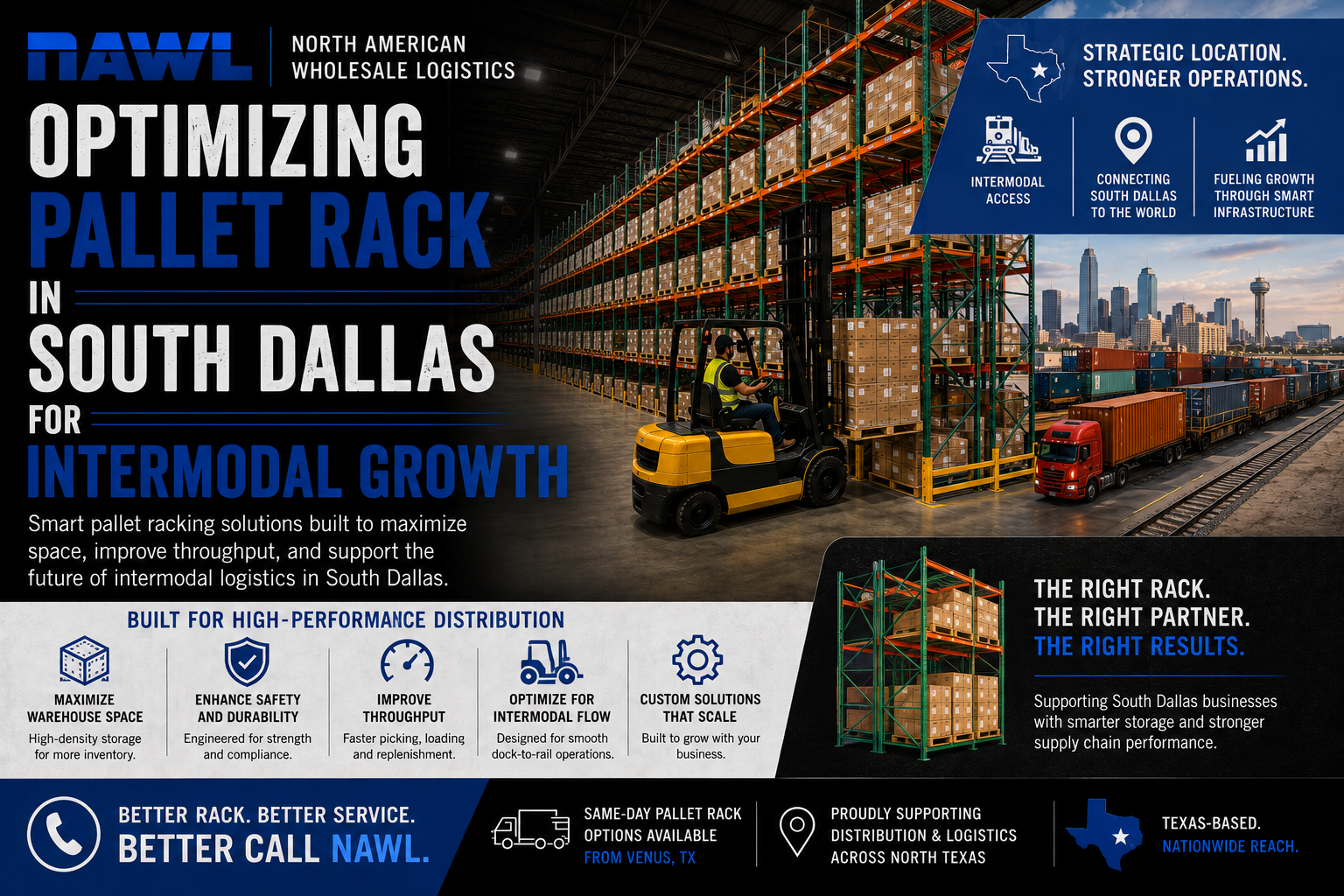
The logistics landscape in Texas, particularly south of Dallas, is undergoing significant transformation. The growth of the UP intermodal facility in Dallas and the expansion of the Lancaster Inland Port have cemented this region as a critical hub for intermodal distribution. For businesses operating here, optimizing storage and throughput is paramount. This demands intelligent design and deployment of pallet rack in South Dallas, specifically tailored for the unique demands of an intermodal environment.
The Intermodal Advantage in South Dallas and Lancaster
Intermodal freight leverages multiple transportation modes—often rail and truck—to move goods from origin to destination without re-handling the cargo itself. The efficiency gains are substantial, but they hinge on seamless transitions at the intermodal terminal. Lancaster Inland Port racking strategies, combined with the broader intermodal warehouse Texas infrastructure, are designed to support this rapid flow of goods.
The strategic location south of Dallas offers direct access to major highways and the UP intermodal ramp, attracting a surge of distribution centers (DCs) and cross-dock operations. This growth is driven by the need to quickly unload containers from rail, sort or consolidate goods, and reload them onto trucks for final delivery. The success of these operations is directly tied to the efficiency of the warehouse's internal logistics, with racking playing a central role.
Key Considerations for Pallet Rack in an Intermodal Warehouse
When designing or upgrading a warehouse in this high-velocity environment, several factors must guide your pallet rack selection:
Throughput and Accessibility
Intermodal warehouses prioritize rapid movement. Goods arrive in high volume, often needing to be processed and dispatched within hours. This necessitates racking systems that offer excellent accessibility and minimize handling time. Selective pallet rack, while common, might not always be the most efficient solution for every SKU or operation. Drive-in or push-back rack can offer higher density for high-volume, low-SKU items, but ensure the trade-off in accessibility is acceptable for your specific operational flow. For cross-docking, minimal long-term storage is often needed; instead, immediate access and clear lanes for staging are critical.
Cross-Docking Optimization
Cross-dock facilities are designed for speed, not storage. Goods spend minimal time in the warehouse, typically less than 24 hours. The racking here often serves as a temporary staging area. Lancaster Inland Port racking for cross-docks frequently incorporates flow rack or carton flow solutions for smaller, faster-moving items, or simply wide-span shelving and floor-level staging areas for palletized goods. The emphasis is on clear lanes, minimal obstructions, and efficient segregation of incoming and outgoing shipments. Dock-level access and ample space for material handling equipment (MHE) are non-negotiable.
Distribution Center Requirements
Unlike pure cross-docks, distribution centers in the South Dallas region handle longer-term storage and more complex order fulfillment. Here, a diverse range of racking solutions might be appropriate. High-density options like very narrow aisle (VNA) or automated storage and retrieval systems (AS/RS) can maximize cube utilization for slower-moving items or reserved stock. Conversely, selective rack remains a workhorse for diverse SKU mixes and high pick-face requirements. Integrating mezzanines or multi-level picking systems can also enhance picking efficiency for e-commerce or B2B fulfillment operations.
Durability and Safety
The sheer volume of MHE traffic in intermodal warehouses increases the risk of rack damage. Investing in durable, high-quality pallet rack in South Dallas is not an option; it’s a necessity. This includes robust uprights, heavy-duty beams, and integrated rack protection accessories like column guards, end-of-aisle protectors, and safety netting. Regular rack inspections and maintenance protocols are also crucial for ensuring worker safety and preventing costly downtime.
Scalability and Adaptability
The South Dallas and Lancaster intermodal market is dynamic. Your racking solution should be designed with future growth and potential operational shifts in mind. Modular racking systems allow for easier expansion or reconfiguration as inventory profiles change or as demand fluctuates. Flexibility in design can save significant capital expenditure down the line when business needs evolve.
NAWL: Your Partner for Intermodal Warehouse Texas Racking
At NAWL, we understand the specific pressures and opportunities presented by the South Dallas and Lancaster Inland Port racking environment. Our expertise extends beyond simply selling rack; we partner with you to design a comprehensive storage solution that aligns with your operational goals. From high-density systems for efficient container destuffing to optimized cross-dock staging areas and robust long-term storage for distribution, we provide solutions that enhance throughput, improve safety, and drive profitability.
We specify and manufacture durable, high-quality pallet rack engineered to withstand the rigors of a high-volume intermodal operation. Our team works closely with you to analyze your specific needs, considering factors like SKU velocity, inventory turns, material handling equipment, and projected growth. This allows us to deliver a tailored, efficient, and scalable racking system.
To thrive in the competitive intermodal warehouse Texas landscape, your facility needs a racking system built for speed, efficiency, and reliability. Don't settle for off-the-shelf solutions that compromise your operations.
Ready to optimize your pallet rack in South Dallas? Contact us today to discuss your specific requirements and request a quote for a customized racking solution.