Warehouse Pick Modules: Types, ROI & Design Guide
July 22, 2026
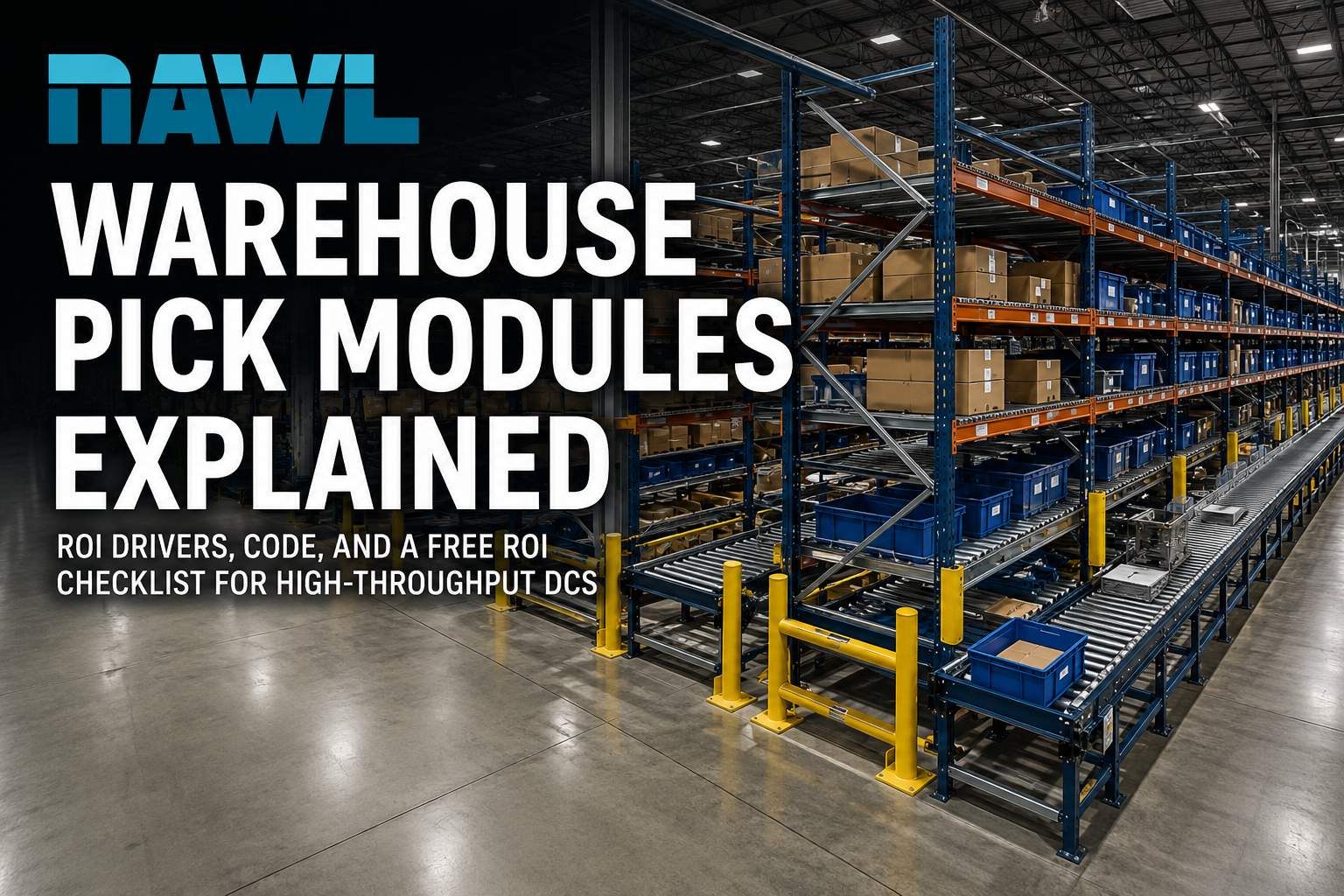
Warehouse Pick Modules Explained: Types, Benefits & ROI Guide
If your warehouse is running out of floor space, struggling with long picker travel times, or processing thousands of order lines every day, a warehouse pick module could dramatically increase throughput without expanding your building.
A properly designed pick module combines pallet racking, carton flow, conveyors, and elevated work platforms into one integrated system. Instead of building outward, you build upward—making better use of your existing warehouse footprint.
Whether you're operating a distribution center, 3PL, manufacturing facility, or e-commerce fulfillment warehouse, understanding when a pick module makes financial sense is the first step.
What Is a Warehouse Pick Module?
A warehouse pick module is a multi-level storage and order fulfillment system designed to maximize both vertical space and picking efficiency.
Most systems combine several technologies into one structure, including:
- Selective pallet racking for reserve inventory
- Carton flow rack for fast-moving case picking
- Shelving for each-pick operations
- Conveyor systems for order transport
- Elevated walkways and mezzanine platforms
- Stair towers and safety gates
- Guardrails and fall protection
- Integrated lighting and fire protection
The result is a highly efficient fulfillment system capable of processing significantly more orders than traditional pallet racking layouts.
When Does a Pick Module Make Sense?
Not every warehouse needs one.
A pick module usually delivers the best return when your operation includes:
- More than 1,000 order lines per day
- Thousands of active SKUs
- Fast-moving inventory
- Buildings with 24'+ clear ceiling height
- Long picker travel distances
- Seasonal spikes in order volume
- Labor shortages or increasing labor costs
If your warehouse has fewer SKUs and moderate order volume, selective pallet rack with carton flow lanes may be the more cost-effective solution.
Types of Warehouse Pick Modules
Case Flow Pick Module
Best for medium-velocity products shipped by the case.
Inventory is replenished from the rear while operators pick from the front using gravity-fed carton flow lanes.
Advantages
- Faster replenishment
- Better inventory rotation
- Reduced picker travel
- Consistent case flow
Each-Pick Module
Ideal for e-commerce and piece-picking environments.
Products are stored in shelving or narrow carton flow lanes while completed orders move away on conveyors.
Best For
- Retail fulfillment
- Apparel
- Consumer goods
- E-commerce
- Healthcare distribution
Full Pallet Pick Module
Designed for warehouses moving complete pallets instead of individual cartons.
Gravity pallet flow systems allow forklifts to replenish inventory while operators pick from dedicated lanes.
Perfect for:
- Beverage
- Food Distribution
- Manufacturing
- Building Materials
Hybrid Pick Module
The most common configuration today.
A hybrid system combines multiple picking methods into one structure.
Typical layout:
Level 1
- Full pallet picking
- High-volume case picking
Level 2
- Carton flow
- Medium velocity SKUs
Level 3
- Each-pick
- Small-item fulfillment
Reserve pallet storage typically runs behind every picking level.
Why Companies Invest in Pick Modules
The biggest benefit isn't simply adding more racking.
It's reducing labor while increasing throughput.
1. Increase Labor Productivity
Shorter travel distances and optimized picking paths can improve picking productivity by 30–60% compared to traditional layouts.
2. Maximize Warehouse Cube
Instead of using only the ground floor, pick modules utilize the full building height.
A warehouse with a 28-foot clear height can often double or triple active picking positions without expanding the building.
3. Delay Costly Building Expansions
Building a new warehouse is expensive.
Many companies discover they can gain years of additional capacity simply by installing a properly engineered pick module inside their existing facility.
4. Improve Peak Season Performance
Conveyor-fed pick faces allow seasonal employees to become productive faster while maintaining higher throughput during busy periods.
What Drives ROI?
Every project is different, but the largest ROI drivers usually include:
- Labor savings
- Reduced picker travel
- Better cube utilization
- Higher throughput
- Deferred building expansion
- Lower cost per order
For many high-volume distribution centers, labor savings alone can produce a payback period of approximately 18–36 months.
Important Design Considerations
Before designing a pick module, several engineering decisions should be made.
Slotting Strategy
Fast-moving products belong closest to pick faces.
Poor slotting reduces the value of even the best-designed system.
Replenishment
Gravity flow lanes require efficient replenishment from reserve inventory.
Planning replenishment paths early prevents future bottlenecks.
Fire Protection
Sprinkler systems, egress requirements, and guarded openings are major design considerations that should be coordinated early in the project.
Structural Engineering
Pick modules must comply with applicable building codes and industry standards, including load ratings and RMI/ANSI MH16.1 requirements for rack systems and the International Building Code (IBC) for elevated structures. Final engineering should always be completed by a licensed structural engineer familiar with the project's seismic requirements.
System Integration
Racking, decking, conveyors, supports, and safety equipment should be designed as one integrated system—not assembled from mismatched components after the fact.
How NAWL Supports Pick Module Projects
NAWL supplies the structural components dealers need to quote and build pick module systems efficiently.
Our product offering includes:
- Teardrop-compatible uprights
- Structural step beams
- Wire decking
- Pallet supports
- Rack protection products
- Quick-ship inventory from Venus, Texas
For conveyor design, controls, slotting strategy, fire protection, and overall system integration, we work alongside your preferred systems integrator or engineer of record. Dealers comparing rack suppliers can see how our stocking program measures up.
Frequently asked questions
How much does a warehouse pick module cost?
Costs vary based on building size, throughput requirements, automation level, and fire protection needs. Most projects range from several hundred thousand dollars to multiple millions for fully integrated distribution center systems.
What's the difference between a mezzanine and a pick module?
A mezzanine simply creates additional floor space. A pick module is purpose-built for warehouse fulfillment and integrates storage, conveyors, pallet racking, and picking operations into one engineered system.
How long does installation take?
Steel installation typically requires 6–12 weeks after materials arrive. Complete projects—including conveyors, controls, sprinkler modifications, and commissioning—often take 6–9 months from approval to full operation.
Does NAWL install pick modules?
NAWL supplies the structural racking system, beams, decking, and related components. Design, integration, and installation are completed by qualified warehouse integrators and licensed engineers.
Ready to Plan Your Next Distribution Center?
Whether you're expanding an existing warehouse or designing a new high-throughput fulfillment operation, NAWL can help you specify the right structural rack system for your project.
Request a design consult today and we'll review your building dimensions, SKU profile, throughput goals, and operational requirements to help determine the best structural solution.