Pallet Rack Uprights in Dallas: Depth, Height, Gauge & Load Planning
September 2, 2026
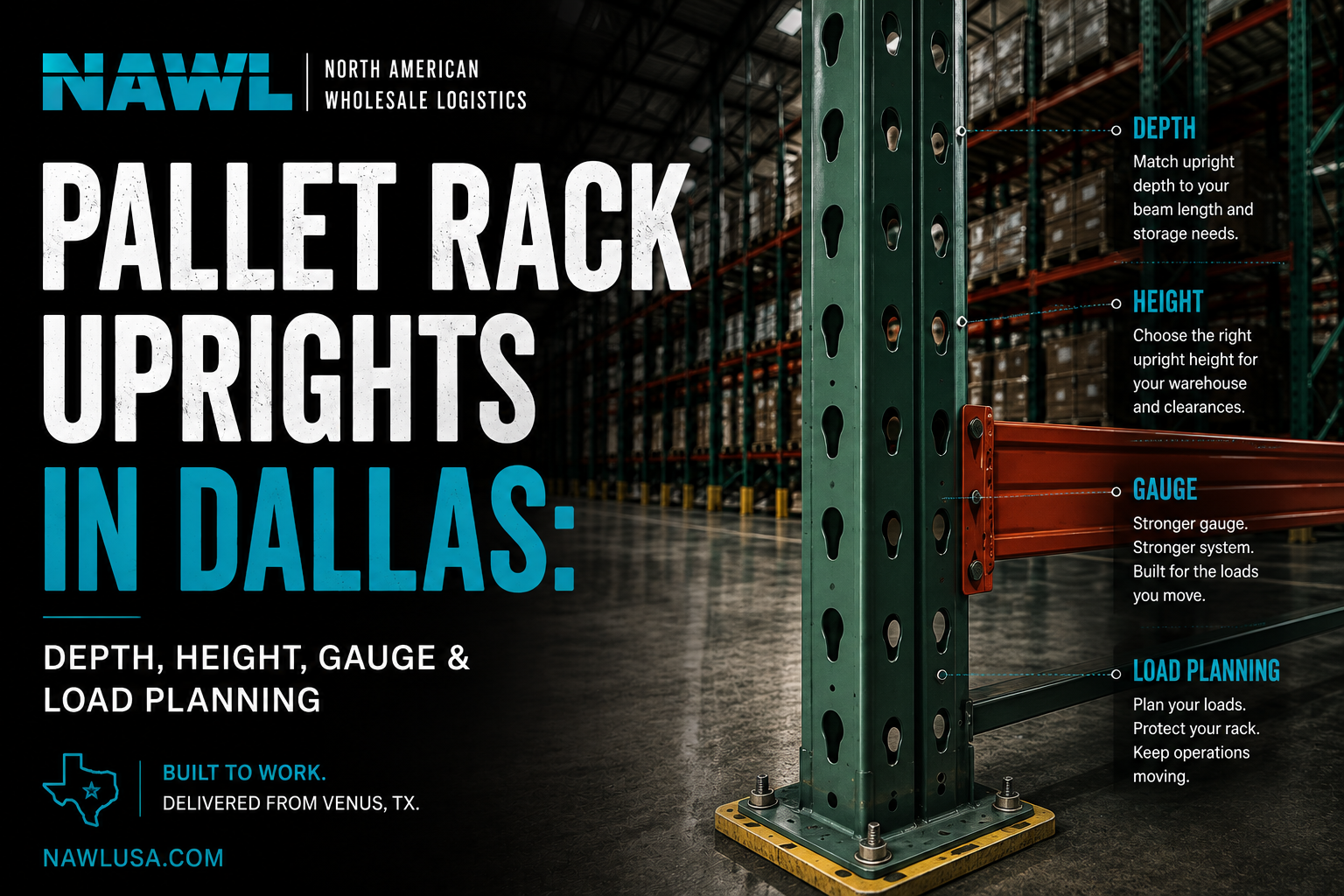
Choosing the right pallet racking system is fundamental to the efficiency and safety of any warehouse or distribution center. At its core are the pallet rack uprights in Dallas, the vertical components that bear the weight of your stored goods. These aren't one-size-fits-all components; their specifications directly impact capacity, safety, and operational flow. Understanding the nuances of upright depth, height, gauge, and how they factor into comprehensive load planning is crucial for making informed purchasing decisions.
This guide will cut through the jargon, providing practical insights for warehouse managers, distributors, and dealers looking to optimize their storage solutions, particularly in the bustling Dallas market. We'll delve into the specifics that define a robust and reliable racking system, ensuring your investment stands the test of time and heavy loads.
Understanding Upright Dimensions: Depth and Height
When evaluating pallet rack uprights in Dallas, two primary dimensions immediately come to mind: depth and height. These are dictated by the pallets you use and the available vertical space in your facility.
Upright Depth
Upright depth, also known as frame depth, refers to the measurement from the front to the back of the upright frame. This dimension must correspond closely to the depth of your pallets. Standard pallet depths in North America are often 40 or 48 inches. While it might seem intuitive to match the frame depth exactly to the pallet depth, standard practice often involves selecting an upright depth slightly less than the pallet depth. This allows the pallet to overhang the front and back beams slightly, ensuring stable support across the beams rather than resting solely on the upright's depth.
Common upright depths include 36, 42, and 48 inches. Choosing the correct depth is critical for pallet stability and preventing accidental dislodgment. An upright that is too shallow for your pallet can lead to dangerous overhang and potential collapses, while an excessively deep upright can waste valuable aisle space.
Upright Height
Upright height is perhaps the most visible dimension, determining the number of storage levels your racking system can accommodate. This decision is driven by your facility's clear ceiling height, forklift mast reach, and the height of your palletized loads. Maximizing vertical space is a key objective for most warehouses, but it must be done within safe operating parameters.
Standard upright heights range significantly, often from 8 feet to over 30 feet, with increments typically in 1-foot or 6-inch steps. When calculating the required height, you must factor in the height of your pallets, the vertical clearance needed between load levels for safe loading and unloading (often 4–6 inches), and the top beam level's clearance from the ceiling.
Incorrect height selection can lead to underutilized space or, worse, beams positioned too high for safe access, creating a costly mistake. Remember to account for sprinklers, lighting, and any overhead obstructions.
The Role of Upright Gauge
Gauge refers to the thickness of the steel used in the upright columns. In the steel industry, a lower gauge number indicates thicker steel. For example, 14-gauge steel is thinner than 12-gauge steel. The gauge of your pallet rack uprights is directly proportional to their strength and load-bearing capacity.
Thicker-gauge uprights (a lower gauge number) are designed to withstand heavier loads and impacts from forklifts. While they come at a higher material cost, the investment often pays dividends in enhanced safety, durability, and reduced maintenance over the system's lifespan. For high-density storage or operations with heavy product movement, opting for a heavier gauge is a wise choice. Conversely, lighter loads might permit the use of a thinner, more cost-effective gauge.
Understanding the relationship between gauge, material strength, and load capacity is essential for ensuring your racking system meets all safety standards and operational demands. Always refer to manufacturer specifications and relevant RMI (Rack Manufacturers Institute) standards when making these critical decisions.
Anchoring and Footplates: The Foundation of Stability
Even the most robust pallet rack uprights in Dallas are only as stable as their connection to the floor. This is where anchoring and footplates become paramount.
Footplates
Footplates are welded to the base of each upright column and distribute the load over a larger floor area. The size and thickness of these footplates affect the rack's stability and its ability to prevent the upright from punching through the concrete slab under heavy loads. Larger footplates generally offer better load distribution and stability.
Anchors
Anchors firmly secure the uprights to the warehouse floor. Most racking systems require at least two anchors per footplate, strategically placed to resist uplift and horizontal forces. The type of anchor (e.g., wedge anchors, drop-in anchors) and their embedment depth depend on the rack's capacity, seismic requirements, and the concrete slab's condition and thickness. Improper anchoring is a significant cause of rack failure and can lead to severe accidents. Always ensure installation adheres to RMI standards and local building codes.
Comprehensive Load Planning
Effective load planning is the culmination of all these factors. It's not just about how much weight an upright can theoretically hold, but how that weight is distributed and managed throughout the system. Here's a quick checklist:
- Total Rack Capacity: This is determined by the weakest link—be it the upright's gauge, beam capacity, or anchoring strength. Never exceed the stated capacity for any component.
- Load Distribution: Ensure loads are evenly distributed on beams and within bay limits. Avoid concentrating heavy loads in a single area.
- Pallet Condition: Damaged pallets can compromise stability and should be removed from circulation.
- Forklift Operators: Properly trained operators are crucial to preventing impact damage to uprights and beams.
- Inspection and Maintenance: Regular inspections for damage, wear, and proper anchoring are non-negotiable for safety. Address any issues promptly.
For facilities in Dallas, understanding these load planning principles is key to maintaining a safe and efficient operation. NAWL's Products are designed with these rigorous standards in mind, providing peace of mind.
Conclusion
Selecting the right pallet rack uprights in Dallas involves careful consideration of depth, height, gauge, anchoring, and a meticulous approach to load planning. These aren't isolated decisions; they are interconnected factors that collectively define the safety, efficiency, and longevity of your warehouse storage system. Investing in quality components and thoughtful design upfront prevents costly repairs, downtime, and potential hazards down the line. We encourage you to review our existing guides, like choosing frame height, for further insights.
At NAWL, we're committed to providing robust and reliable storage solutions. Don't compromise on the foundation of your warehouse. For tailored advice on your specific needs or to explore our quick-ship components, reach out to our experts. We can help you navigate these critical choices to build a system that works for you.
Ready to optimize your Dallas warehouse? Request a quote or inquire about product availability today. Our team is ready to assist with all your pallet racking needs.