Pallet Rack Shims: Leveling Warehouse Racking the Right Way
September 17, 2026
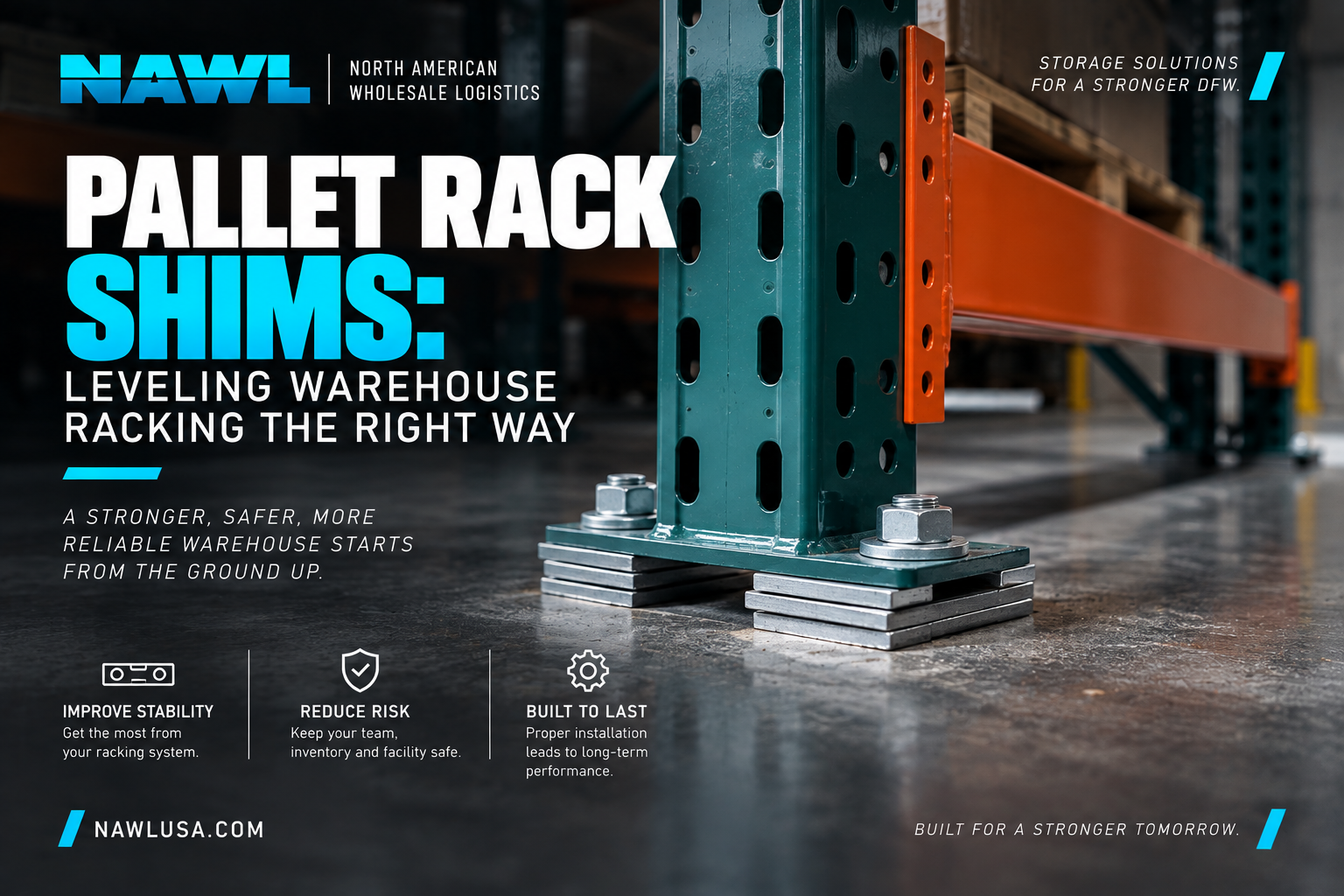
Every warehouse manager understands that stability is non-negotiable when it comes to pallet racking. An unstable rack system isn't just inefficient; it's a significant safety hazard and a compliance nightmare. While anchors secure your rack to the floor, proper leveling is just as critical. This is where pallet rack shims come in. Often overlooked or improperly used, these small components are essential for maintaining the structural integrity and safe operation of your warehouse storage system.
At NAWL, we've seen the consequences of both neglecting and misusing shims. This guide will clarify their purpose, explain when they are necessary, and provide practical advice for ensuring your racking, whether in DFW or beyond, stands perfectly level and secure.
Why Leveling Matters: The Foundation of Safe Racking
Before we dive into shims, let's establish why precise leveling is paramount. Pallet rack systems are designed to distribute heavy loads evenly across their components and down to the floor. If the floor is uneven, or if the rack's base plates are not properly supported, several issues arise:
Uneven Load Distribution
When a rack is out of level, the load it carries is not distributed equally. This can create localized stress points on uprights, beams, and connections. Over time, these stresses can lead to metal fatigue, deformation, and even catastrophic failure. Imagine a column designed to bear weight vertically; if it's leaning, the forces aren't channeled as intended, drastically reducing its effective load capacity.
Increased Instability
A rack system that isn't level is inherently less stable. Even a slight tilt can compromise its resistance to impact from forklifts or seismic activity. In high-density storage environments, where vertical space is maximized, even minor instability can translate to significant sway at higher elevations, posing a serious threat to personnel and inventory.
Compliance and Inspection Issues
OSHA and other regulatory bodies have clear guidelines regarding the safe installation and maintenance of pallet racking. Proper leveling is a fundamental aspect of these guidelines. During inspections, an out-of-level rack system is an immediate red flag, potentially leading to fines, operational shutdowns, or demands for costly reinstallation. For facilities in DFW, where robust logistics operations are critical, maintaining compliance is not just good practice; it's essential for business continuity.
When Are Pallet Rack Shims Needed?
In an ideal world, all warehouse floors would be perfectly flat and level. In reality, concrete floors, especially in older buildings or those experiencing heavy traffic, are rarely uniform. Slight variations, slopes, or imperfections are common. This is precisely why pallet rack shims are indispensable.
Understanding Floor Tolerances
Most pallet rack manufacturers, including NAWL, specify allowable floor tolerances for their systems. These tolerances dictate the maximum permissible deviation in floor level over a given distance. For example, a common tolerance might be a maximum of 1/8 inch deviation over 10 feet. If your floor exceeds these tolerances, shims are required.
Pre-Installation Floor Assessment
Before any rack installation begins, a thorough floor assessment is critical. This involves using lasers, levels, and surveying equipment to map out any high and low spots. This survey determines where shims will be needed and what thickness is appropriate. Skipping this step is a common and often costly mistake.
Identifying Unlevel Conditions
Even after installation, it's possible for settling or other factors to cause a rack to become unlevel. Visual inspection, using a level on uprights, and checking for plumbness are routine maintenance checks that can identify issues. If you notice a rack leaning, or if uprights are not perpendicular to the floor, shims are likely needed.
Proper Use of Pallet Rack Shims
Correctly shimming a pallet rack system is an art and a science. It's not about stuffing material under base plates; it's about precise adjustments that evenly distribute weight.
The Right Material Matters
NAWL recommends using shims made from steel. Plastic or wooden shims are not suitable for pallet racking due to their inability to withstand heavy, continuous loads without deforming or cracking. Steel shims provide the necessary rigidity and durability. They should also be resistant to corrosion, especially in environments with temperature fluctuations or moisture.
Placement and Stacking
Shims should be placed directly under the base plate of the upright. The goal is to fill the gap between the floor and the base plate, ensuring full contact across the entire footprint of the base plate. This prevents point loading and ensures the upright is fully supported.
- Avoid Over-Stacking: While shims can be stacked, it's crucial to limit the number. Generally, no more than three shims should be stacked together. Excessive stacking can create instability. If a gap requires more than three shims, it often indicates a severe floor issue that might necessitate floor grinding or pouring a leveling compound before rack installation.
- Full Coverage: The shim stack should be at least the same size as the base plate to provide complete and uniform support.
Integrated with Anchoring
Shims should be installed before anchoring the uprights. The shims ensure the upright is level and plumb; then the anchors secure it in that precise, level position. Anchoring a rack first and then attempting to shim can lead to misaligned anchors and compromised stability.
What to Avoid When Shimming Pallet Rack
Misuse of shims can be just as detrimental as not using them at all. Be aware of these common pitfalls:
- Using Non-Approved Materials: Do not use wood, plastic, pieces of scrap metal, or any material not designed for industrial load-bearing applications as shims. These materials will degrade, compress, or fail under pressure.
- Shimming After Anchoring: As mentioned, shims must be placed and checked for level before anchors are tightened. Adjusting shims after anchoring can bend anchors or create new stresses.
- Guesswork: Shimming should never be a guessing game. Use accurate leveling tools to determine the precise thickness needed. Each shim increment should be purposeful.
- Ignoring Floor Issues: Shims are a corrective measure for minor floor imperfections, not a solution for fundamentally unsound or severely unlevel floors. If your floor has significant dips, slopes, or cracks, those issues need to be addressed at a foundational level first.
NAWL: Your Partner in Safe Rack Systems and Accessories
Properly installed and leveled pallet racking is fundamental to a safe and efficient warehouse. Pallet rack shims are small components with a massive impact on the overall integrity of your storage system. Understanding their purpose and using them correctly will save you headaches, prevent accidents, and ensure compliance for years to come.
At NAWL, we don't just sell rack; we provide comprehensive solutions and expertise. We offer a full range of high-quality Accessories, including durable steel shims, designed to integrate seamlessly with our racking systems. Whether you're planning a new installation or maintaining an existing one, our team is ready to assist you in making the right choices for your operation in DFW or across the nation. For more details on proper rack installation, visit our guide on Pallet Rack Installation.
Don't compromise on safety or efficiency. Make sure your racking stands tall and true.
Request availability for our quality pallet rack shims and other accessories, or get a quote for a complete racking system designed for stability and safety. Fill out the form below or contact us directly today.