Pallet Rack Bay Width & Beam Capacity: Key Decisions
November 2, 2026
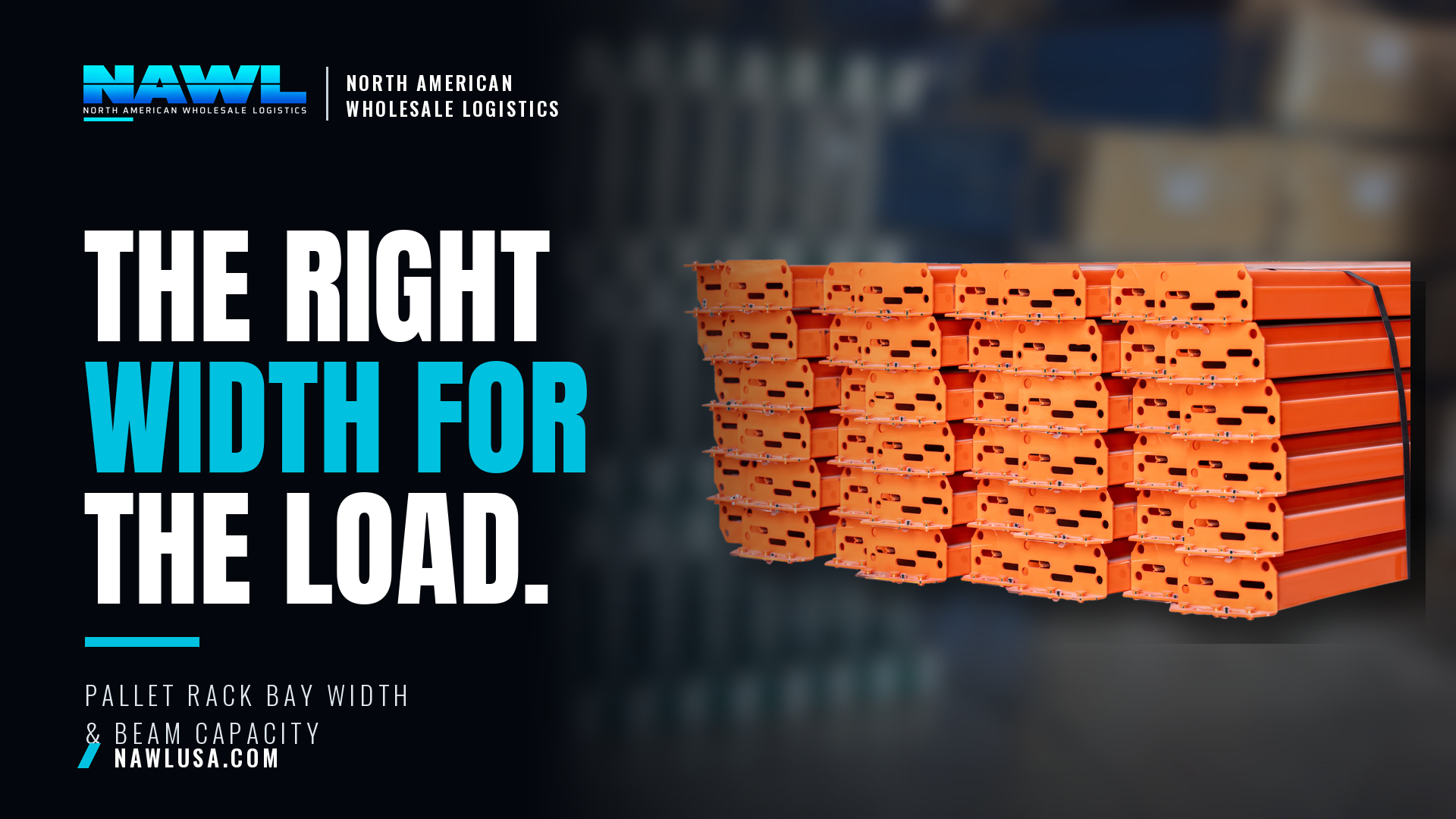
Every square foot of warehouse space represents a cost and a potential for profit. When designing or optimizing your storage system, the decisions you make around pallet rack bay width directly influence both efficiency and, critically, safety. It's not just about fitting pallets; it's about understanding the mechanics of how width dictates beam capacity and, consequently, the load your system can safely bear.
At NAWL, we've helped countless warehouse managers and distributors – including many in the DFW area – navigate these choices. This post will break down the practical implications of wider versus narrower bays, helping you make informed decisions for your operations.
The Fundamental Relationship: Width and Capacity
When we talk about pallet rack bay width beam capacity, we're discussing a core engineering principle: the longer a beam spans, the less weight it can support without excessive deflection or failure. Imagine a bridge: a short, stout bridge can hold more than a long, slender one made of the same material. Pallet rack beams operate under the same physics.
How Beam Length Affects Load Rating
Manufacturers like NAWL rate beams based on their span (length) and their section properties (the shape and thickness of the steel). A beam's rated capacity decreases as its unsupported span increases. This is not an opinion; it's a structural engineering fact. For example, a beam designed to hold 5,000 lbs over an 8-foot span might only be rated for 3,500 lbs over a 12-foot span. Ignoring this relationship is a direct route to safety hazards.
Understanding Bay Width
Bay width refers to the clear distance between the upright frames. This distance dictates the effective span of your load beams. Therefore, a wider bay means longer beams, and longer beams mean reduced capacity. A narrower bay means shorter beams, and shorter beams mean increased capacity.
Wider Bays: Pros and Cons
Wider bays, typically 108 inches (9 feet) or 144 inches (12 feet) in standard rack systems, offer certain operational advantages but come with distinct structural trade-offs.
Advantages of Wider Bays:
- Fewer Upright Frames: A primary driver for wider bays is often the desire to minimize the number of upright frames. Fewer uprights mean less steel, which can, at first glance, appear to be a cost savings. Fewer uprights also mean fewer obstacles for forklift operators, potentially reducing impact damage to the rack structure itself.
- Increased Flexibility for Pallet Sizes: Wider bays can accommodate a broader range of pallet sizes or allow for more clearance around standard pallets, which can be useful in operations dealing with varied inventory dimensions.
- Improved Forklift Maneuverability: For some operations, wider bays allow for easier placement and retrieval of pallets, particularly when dealing with specialized equipment or less experienced operators. The additional clear space can speed up operations and reduce minor bumping incidents.
Disadvantages of Wider Bays:
- Reduced Beam Capacity: This is the critical factor. To safely support the same pallet weight over a wider span, you will need significantly heavier-gauge steel beams or beams with a deeper profile. These stronger beams are more expensive per beam. This can negate any cost savings from fewer uprights.
- Increased Deflection: Longer beams naturally deflect more under load. While within acceptable limits for rated capacity, excessive deflection can be unnerving and might indicate insufficient beam strength. It can also create issues with automated systems or tight clearances.
- Higher Overall Beam Cost (Often): While you buy fewer uprights, the increased cost per beam due to needing a heavier-duty component can often lead to a higher total beam cost for the same storage capacity.
- Potential for Misuse and
SafetyRisks: If the rack system isn't clearly marked for its reduced capacity, operators might load it as if it were a standard bay, leading to overloading and structural failure. This is a serioussafetyconcern.
Narrower Bays: Pros and Cons
Narrower bays, commonly 96 inches (8 feet) or 72 inches (6 feet), are often chosen for maximizing beam capacity and structural rigidity.
Advantages of Narrower Bays:
- Increased Beam Capacity: Shorter beams mean significantly higher
pallet rack bay width beam capacity. This allows for lighter-gauge, more economical beams to support the same load, or for the existing beams to support heavier loads. - Enhanced Structural Rigidity: More uprights provide greater stability to the overall rack structure. This can be beneficial in high-traffic areas or facilities prone to seismic activity.
- Reduced Deflection: Shorter beams deflect less, contributing to a more stable and robust system.
- Cost-Effective Beams: Often, the ability to use standard, lighter-duty beams with narrower bays makes the beam components themselves more cost-effective per pallet position.
Disadvantages of Narrower Bays:
- More Upright Frames: The trade-off for higher beam capacity is a greater number of upright frames. This increases the initial capital cost for uprights and consumes more floor space with steel components.
- Reduced Flexibility: Narrower bays offer less leeway for odd-sized pallets or future changes in inventory dimensions. Planning for this upfront is crucial.
- Potential for Forklift Damage: More uprights mean more potential targets for forklift impacts. This is a common concern, especially in busy warehouses. However, proper rack protectors and operator training can mitigate this risk. In
DFWwarehouses, where space optimization is critical, this must be balanced with the need for efficient movement.
Making the Right Decision for Your Operation
The choice between wider and narrower bays isn't one-size-fits-all. It requires a careful evaluation of several factors:
- Pallet Dimensions and Weight: This is the primary determinant. What are the standard and maximum dimensions and weights of your loaded pallets? Your rack system must accommodate your largest and heaviest pallets. For an in-depth look at load ratings, consult our guide on pallet rack beam capacity and load ratings.
- Forklift Aisle Widths and Equipment: The type of forklifts and material-handling equipment you use will influence the required clear opening between uprights. Don't compromise on necessary clearances for
safety. - Future Growth and Flexibility: Consider how your inventory might change over time. Will you need to store different pallet sizes? Designing with some flexibility can save costly reconfigurations later.
- Budget: While wider bays might seem cheaper due to fewer uprights, the higher cost of heavy-duty beams often balances this out or even makes narrower bays more economical overall. A thorough cost analysis, not just a per-component look, is essential.
- Traffic Flow and Damage Potential: Assess how busy your aisles are and the skill level of your operators. More uprights might mean more impact points, but also greater overall structural integrity. In high-traffic
DFWfacilities, this is a constant consideration.
For most standard applications, particularly those in the DFW area looking for quick-ship components, a 96-inch (8-foot) bay width often strikes an excellent balance between pallet rack bay width beam capacity and material cost. It provides sufficient space for two standard 40-by-48-inch pallets side by side with appropriate clearance, allowing for economical beam choices.
The Safety Imperative
Regardless of your chosen bay width, never compromise on safety. Always adhere strictly to the manufacturer's load ratings for your beams and uprights. Overloading beams is a leading cause of rack failure and can result in severe injuries and significant operational disruptions. Ensure your rack system is properly installed, regularly inspected, and clearly marked with capacity placards.
Conclusion
Optimizing your warehouse storage means making informed decisions, not just quick ones. The relationship represented by pallet rack bay width beam capacity is fundamental to designing a safe, efficient, and cost-effective system. By understanding the trade-offs, you can specify a racking system that precisely meets your operational needs without compromising on structural integrity or safety.
NAWL specializes in providing high-quality, durable pallet racking solutions. If you're designing a new warehouse or expanding an existing one, particularly in the DFW region, let our experts guide you in selecting the ideal bay width and beam specifications for your unique application.
Ready to get started? Request availability / Get a quote from NAWL today. We have the quick-ship components you need to build a robust and reliable system.
Ready to spec a system? Request a quote and our team will size it with you.