Pallet Rack Anchors, Shims & Safety Pins Guide
September 26, 2026
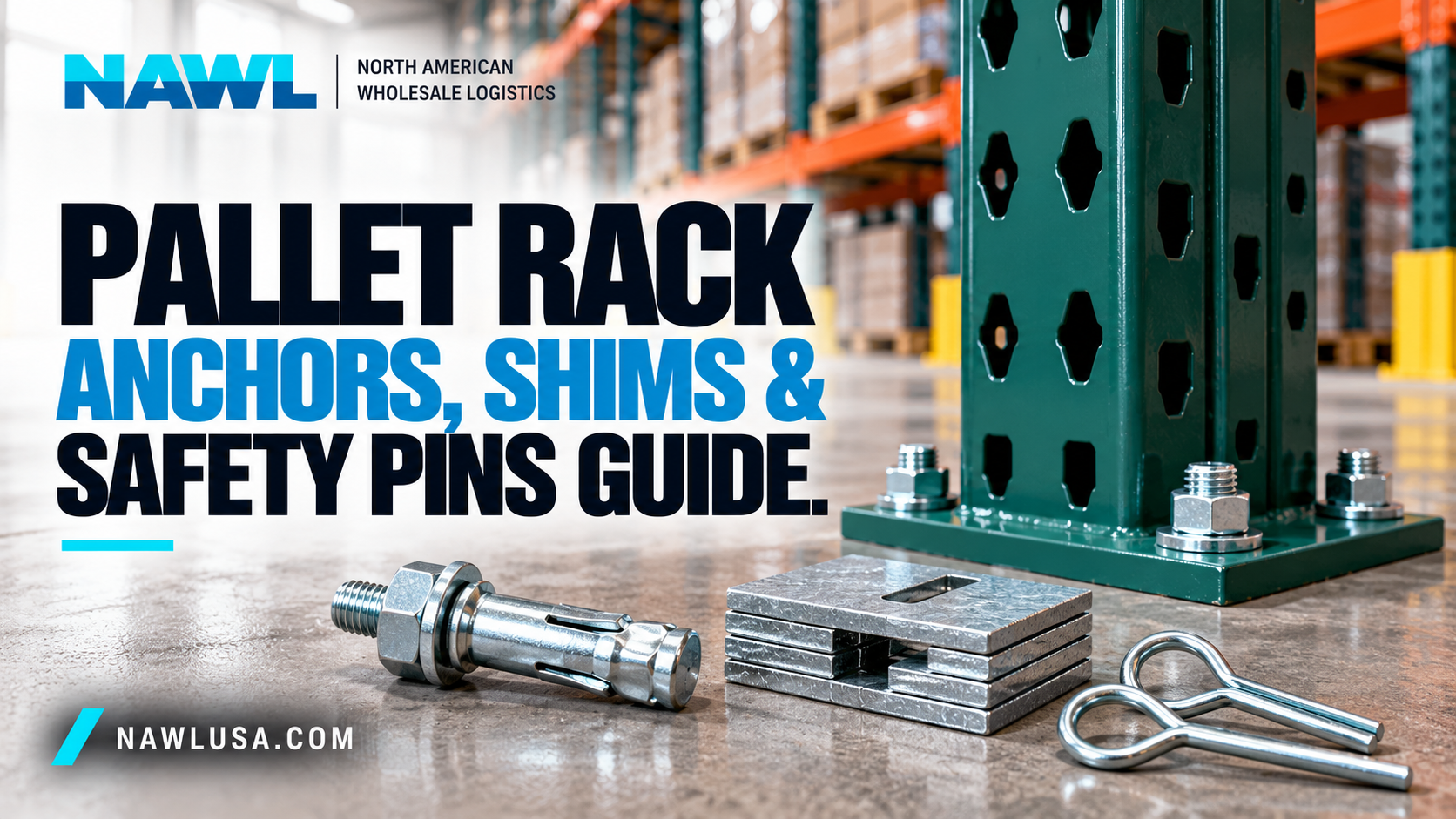
In the world of warehouse operations, efficiency and safety are paramount. While much attention is often paid to the larger structural components of pallet racking, it's the seemingly small parts—the pallet rack anchors, shims, and safety pins—that often determine the overall integrity and safety of your system. These components are not just accessories; they are critical safeguards. Inspectors, whether from OSHA or your insurance provider, understand this. They know that failures often stem from neglected details, and these three items are typically the first they scrutinize.
For warehouse managers, distributors, and dealers, understanding the correct application and maintenance of these small but vital parts is non-negotiable. Especially in a bustling market like DFW, where warehouse space is at a premium and operations run 24/7, cutting corners on these elements is a recipe for disaster. This guide will walk you through why these components are so crucial and what you need to know to ensure your racking system remains safe and compliant.
Pallet Rack Anchors: The Foundation of Stability
Pallet rack anchors are the literal tie that binds your racking system to the concrete slab, preventing tipping and sway. Without proper anchoring, even the most robust rack structure is a hazard waiting to happen. Inspectors in DFW and nationwide will immediately check for their presence, type, and correct installation.
Anchor Bolt Specifications and Best Practices
- Type: The most common anchors for pallet racking are wedge anchors or sleeve anchors. Wedge anchors are generally preferred for heavy-duty applications due to their superior holding power. Ensure the anchors are rated for the loads and concrete strength of your facility.
- Size and Length: Anchor bolt diameter and embedment depth are critical. The Rack Manufacturers Institute (RMI) specification typically calls for a minimum 1/2-inch diameter anchor bolt, properly torqued, and deeply embedded into the concrete. A common embedment depth is 3-1/4 inches for 1/2-inch anchors. Always verify the manufacturer's recommendations for your specific racking system and consult local building codes.
- Placement: Every upright frame, at a minimum, must be anchored with at least one anchor bolt at each base plate. For taller systems or those subjected to seismic activity, additional anchors per base plate might be required, or larger bolts may be specified. The anchor should be placed within the designated area of the base plate, typically close to the column.
- Torque: Anchors must be torqued to the manufacturer's specified setting. Under-torquing can lead to insufficient holding power, while over-torquing can damage the concrete or the anchor itself. This is a common oversight that inspectors will flag.
- Condition: Inspectors look for signs of damage or corrosion, or for anchors that are loose or sheared off. Any such findings are immediate red flags for safety.
Missing or improperly installed pallet rack anchors are among the most frequently cited violations during warehouse inspections. They compromise the entire system's stability, making it vulnerable to impacts from forklifts or even seismic events.
Shims: Leveling the Playing Field
Concrete floors are rarely perfectly level, especially in older DFW warehouses. This is where shims come in. Shims are small, flat plates, typically made of steel or high-density plastic, placed under the base plates of upright frames to ensure the entire racking system is plumb and level. While seemingly minor, shims play a critical role in distributing loads evenly and maintaining the structural integrity of the rack.
When and How to Use Shims Properly
- Plumb and Level: The primary purpose of shims is to bring the upright frames to within the RMI specifications for plumbness (vertical straightness). If an upright frame is not plumb, it can lead to uneven load distribution, increased stress on welds and connections, and ultimately, a weakened structure. The RMI standard for plumbness is typically 1/2 inch in 10 feet of height, measured from the base of the upright to the top of the frame.
- Material: Shims should be made of a durable, non-compressible material. Steel shims are common and preferred for their strength and stability. Avoid using wood or other soft materials that can compress or degrade over time.
- Stacking: While shims are essential, excessive stacking can be problematic. RMI specifications generally recommend limiting shim stack height to 1-1/2 inches, though some manufacturers may specify more or less. If the floor variation requires more than this, it might indicate a need for floor remediation rather than excessive shimming.
- Anchoring Through Shims: Once shims are in place and the upright is level, the anchor bolts must pass through the shims and into the concrete. The shims must be completely covered by the base plate to prevent lateral movement and ensure they do not become dislodged.
Inspectors pay close attention to shim usage. They check for proper leveling, the condition of the shims, and whether they are correctly integrated with the anchoring system. Improper shimming can invalidate load capacities and lead to rack failure.
Safety Pins: The Critical Connection
Safety pins, often called beam-locking pins or clips, are small but indispensable components that prevent beams from accidentally dislodging from upright frames. Without these pins, an upward force—such as an improperly lifted pallet or a forklift mast snag—could lift a beam off its connector, leading to catastrophic collapse. Inspectors will verify the presence and correct installation of safety pins on every beam connection.
Types and Proper Placement of Safety Pins
- Types: There are various types of safety pins, often specific to the rack manufacturer. Common types include teardrop pins, J-pins, and bolted connections. The key is that they are designed to positively lock the beam into the upright connector, preventing accidental dislodgement.
- Presence on Every Connection: This is non-negotiable. Every beam-to-upright connection point must have a properly installed safety pin. If a single pin is missing, it compromises the safety of that beam level and potentially the entire bay.
- Correct Installation: The pin must be fully engaged in its designated hole or slot. It should not be bent, damaged, or partially inserted. Inspectors look for consistency and proper engagement across the entire system.
- Compatibility: Ensure that the safety pins used are compatible with your specific racking system. Using generic or incorrect pins can lead to an unreliable connection.
Missing or incorrectly installed safety pins are among the easiest and most common safety violations identified during inspections. For a relatively inexpensive component, their absence carries a disproportionately high risk. Your warehouse's safety, and your compliance in DFW, depend on these tiny pieces.
Don't Overlook the Details
While this post highlights the critical nature of pallet rack anchors, shims, and safety pins, it's important to remember these are part of a larger safety ecosystem. For a comprehensive understanding of proper installation, refer to our detailed Pallet Rack Installation Guide. Understanding the full scope of your pallet rack accessories is also key to a safe and efficient operation.
NAWL specializes in providing high-quality, compliant racking solutions, including all the critical small parts that ensure your system's long-term safety and stability. We understand the specific demands of the DFW market and offer quick-ship options for many components to keep your operations running smoothly and safely. Don't wait for an inspection to find out your racking system has critical deficiencies. Proactive safety measures are always the best investment.
Ensure your warehouse meets the highest safety standards. Request a quote from NAWL for compliant pallet racking and all necessary safety components. Your team's safety and your operational integrity depend on it.