How to Measure Pallet Rack: A Definitive Guide
September 2, 2026
Understanding how to measure pallet rack components is crucial for any warehouse operation. Whether you're ordering replacement parts, expanding an existing system, or planning a new layout, precise measurements ensure compatibility and safety.
This guide provides a clear, step-by-step methodology for measuring the key components of your pallet rack system. Accurate data prevents costly errors and ensures your new components integrate flawlessly with your current setup.
For dealers and distributors, providing precise measurements to your manufacturer ensures quick, accurate fulfillment and minimizes project delays. This attention to detail strengthens your customer relationships.
Safety First: Preparing for Measurement
Before you begin any measurement, prioritize safety. Ensure the area around the rack is clear of obstructions and forklifts. If possible, measure empty rack sections. Wear appropriate personal protective equipment (PPE), including hard hats and safety glasses. Never compromise safety for speed. Use a sturdy measuring tape, preferably a metal one for accuracy, and have a notepad or tablet ready to record your findings.
Measuring Upright Frames (Depth and Height)
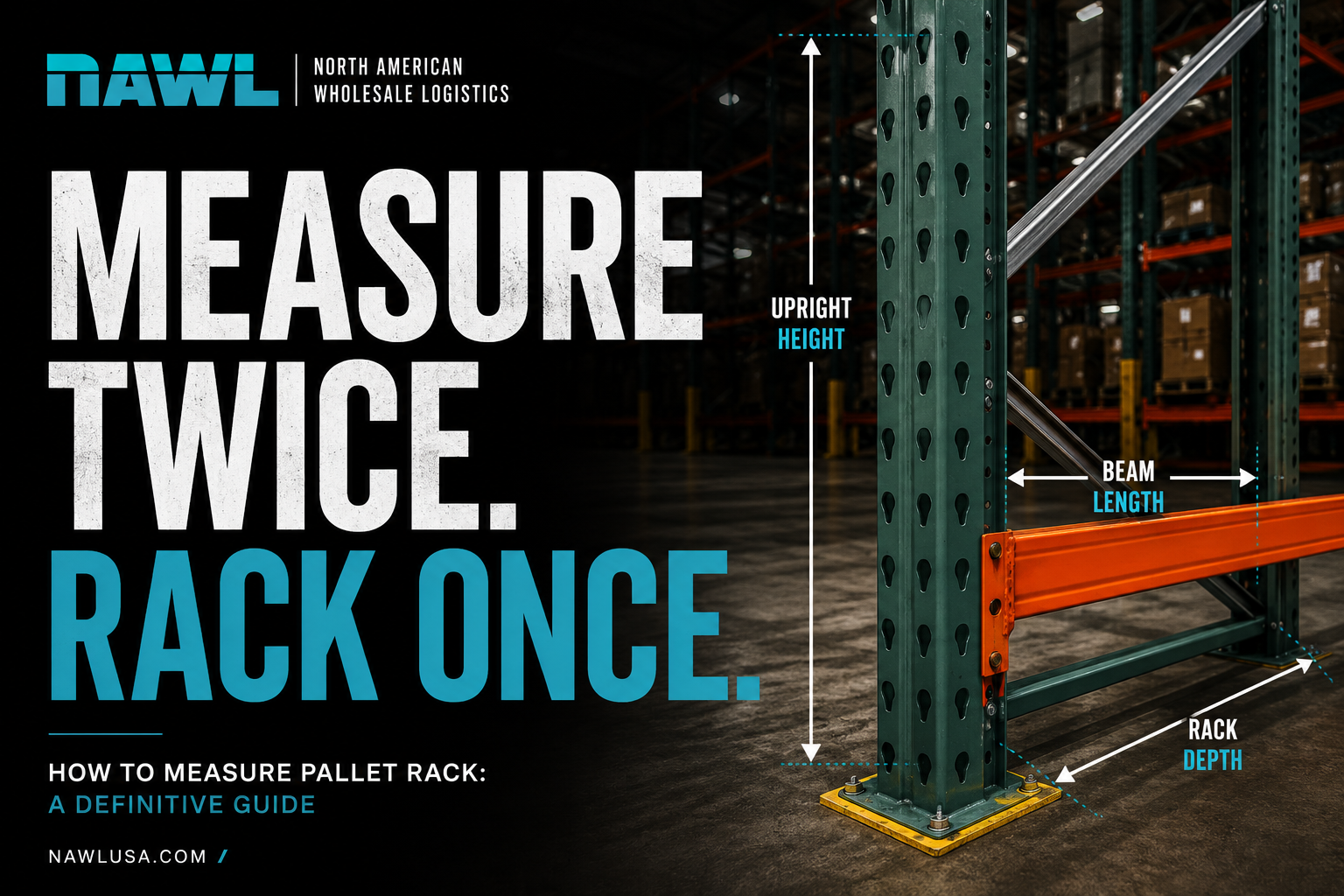
To measure an upright frame, you'll need two key dimensions: depth and height. Frame depth refers to the front-to-back dimension of the frame, which dictates the maximum pallet depth your system can accommodate. Measure this from the outside edge of the front column to the outside edge of the rear column.
Frame height is measured from the floor to the very top of the upright column. This dimension determines the overall vertical capacity of your rack system. Be sure to measure the entire vertical length, not just to the highest beam level.
Determining Beam Length
Beam length is critical for understanding the clear span opening between uprights. There are two common methods. The first is to measure the inside clear span distance between the uprights where the beams connect. The second, and often more reliable method for ordering, is to measure the overall length of the beam from one end connector to the other end connector.
For beams, also note the beam face height (the vertical dimension of the beam itself) and the style of the beam end connector. This detail is essential for ensuring new beams will properly engage with existing uprights.
Assessing Beam Level Spacing
While not a physical component measurement for ordering, understanding beam level spacing is vital for system design. Measure the vertical distance from the top of one beam level to the top of the next beam level. This dictates the clear vertical space available for pallet loads. Record the height of each beam level from the floor.
Also, observe the punch pattern on the uprights – the vertical spacing of the holes where beams attach. Standard industry punch patterns are typically 2, 3, or 4 inches on center. Confirming this ensures new beams are compatible with existing frames.
Identifying Rack Type and Components
Beyond dimensions, identifying the type of rack system is paramount. Common types include selective, drive-in, push-back, and pallet flow. Note the gauge of the steel (thickness) if possible, particularly for upright columns and beams. Also, observe the connection type – teardrop, structural, or other proprietary designs – which will dictate compatibility for new components.
For structural rack, measure the channel dimensions for uprights and beams. For roll-formed, note the upright column profile (e.g., open-back, closed-back). Detailed observation saves time and ensures correct ordering.
Documenting Your Findings
Maintain meticulous records of all measurements. Sketch a simple diagram of your rack system, labeling each measurement clearly. Note any specific features, such as column protectors, row spacers, or wire decking dimensions. Include photographs if possible. This comprehensive documentation is invaluable for accurate quoting and ordering, preventing errors, and streamlining the procurement process.
Provide these details to your dealer, who can then leverage this information for precise orders and efficient project management.
Why Dealers Choose NAWL Quick Ship
NAWL understands the urgency of warehouse operations. Our commitment to supporting dealers means we maintain robust inventories of common pallet rack components. When you provide accurate measurements, our Venus, TX facility is equipped for quick-ship fulfillment, minimizing lead times and keeping your projects on schedule.
This rapid response capability ensures that your customers experience less downtime and faster installations, solidifying your reputation for reliability and efficiency. Trust NAWL to be your partner in delivering solutions quickly and correctly.
FAQ
What's the most critical measurement when ordering replacement beams?
The most critical measurement for replacement beams is the overall length from end connector to end connector, as this ensures proper fit with existing uprights.
How do I measure upright frame depth?
Measure the upright frame depth from the outside edge of the front column to the outside edge of the rear column, providing the total front-to-back dimension.
What does 'beam face height' refer to?
Beam face height is the vertical dimension of the beam itself. It impacts the beam's load capacity and contributes to the overall vertical spacing within the rack system.
Do I need to know the punch pattern of my uprights?
Yes, knowing the punch pattern (e.g., 2, 3, or 4 inches on center) is essential. It ensures that new beams or accessories will correctly align and connect to your existing upright frames.
Why is it important to note the rack type (e.g., teardrop)?
Identifying the rack type, such as teardrop or structural, is crucial because component compatibility is often specific to the connection style. New parts must match the existing system's engagement mechanism.
What if my rack system has custom dimensions?
If your rack system has custom or non-standard dimensions, document them meticulously. Provide all details to your dealer, who can then work with NAWL to source or custom-fabricate compatible components.
Ready to spec a system? Request a quote and our team will size it with you.