Measure Replacement Pallet Rack Uprights Correctly
September 29, 2026
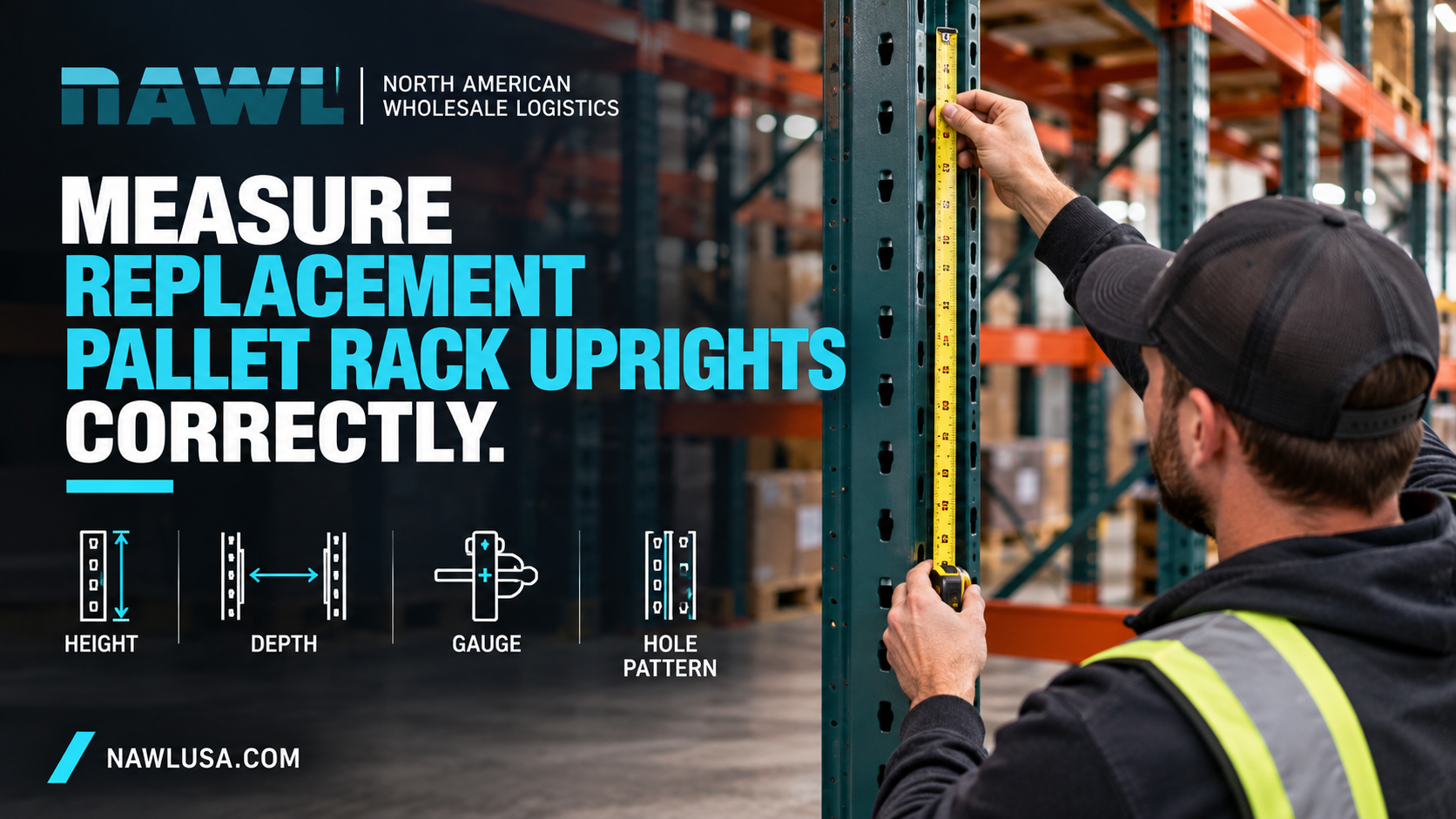
Damaged pallet rack uprights are a safety hazard and a liability. Replacing them promptly is non-negotiable. However, ordering the correct replacement part requires precise measurements. Guesswork here leads to delays, increased costs, and continued safety risks. This guide will walk you through the essential measurements you need to take to ensure you get the right replacement uprights the first time.
Whether you're operating a busy distribution center in DFW or managing a smaller storage facility, understanding these steps is critical for maintaining a safe and efficient warehouse. This process focuses on replacing an existing upright within a functioning rack system, not designing a new one from scratch. If you're specifying a new system, refer to our guide on choosing frame height.
Why Accurate Measurements Matter
Pallet racking systems are engineered to precise specifications. An upright that is even slightly off in depth, height, or bracing pattern can compromise the entire bay's load capacity and structural integrity. Mismatched components can also complicate future inspections and certifications, potentially leading to fines or operational shutdowns. For warehouse managers, getting this right means minimizing downtime and ensuring the safety of personnel and inventory. It also streamlines the procurement process, avoiding returns and reorders that delay your operations.
Essential Measurements for Replacement Uprights
There are several critical dimensions you need to capture when you measure replacement pallet rack uprights. Don't skip any of these; each plays a vital role in ensuring compatibility and structural soundness.
1. Upright Depth
The depth of the upright refers to the front-to-back dimension of the frame. This measurement is crucial because it dictates the size of the pallets that can be safely stored and the overall stability of the rack bay. Most common depths are 36, 42, 48, and 60 inches, but variations exist. Measure from the outside edge of the front column to the outside edge of the rear column. Ensure your measurement is exact, as even a small discrepancy can prevent beams from seating properly or create unsafe overhangs for pallets.
2. Upright Height
Measure the overall height of the upright from the bottom of the footplate to the top of the upright column. This is one of the most straightforward measurements. Use a tape measure and, if necessary, a ladder or lift to get an accurate reading. Confirm the measurement at multiple points if possible, especially on very tall uprights, to account for any slight floor irregularities or previous damage. This height must match your existing system to ensure uniform beam levels throughout your rack aisle.
3. Footplate Bolt Pattern
The footplate is where the upright anchors to the floor. The bolt pattern is the spacing of the anchor bolt holes on this footplate. This is a critical safety measurement. The most common patterns include a single center bolt, two bolts in line, or four bolts (two front, two back). You need to measure:
- Width between bolt centers: From the center of one bolt hole to the center of an adjacent bolt hole across the width of the footplate.
- Depth between bolt centers: From the center of a front bolt hole to the center of a rear bolt hole along the depth of the footplate.
Also, note the overall dimensions of the footplate itself (width and depth). Some rack manufacturers use unique bolt patterns. If your existing footplate uses a less common pattern, providing exact dimensions and a clear photograph can help identify the correct replacement.
4. Column Face Dimensions and Punching
The column face is where the pallet rack beams attach. You need to gather a few details here:
- Column width and depth: Measure the outside width and depth of the column material itself. Common sizes are 3 inches wide by 1-5/8 inches deep, but other dimensions exist.
- Hole size and shape: Are the holes round, teardrop, square, or slotted? Note their exact shape.
- Punching pattern: Measure the vertical spacing of the holes from the floor up the column. This is typically measured from the top of one hole to the top of the next, or from center to center. Also, note if the holes are punched on 2-inch, 3-inch, or 4-inch centers. This determines how your beams will connect and at what levels.
Different manufacturers use proprietary punching patterns, even if the general upright dimensions are similar. Providing a clear photo of the column and a detailed drawing with hole spacing is invaluable here. If you're working with an odd or very old system, sometimes a small section cut from the existing column (if safe and permissible) can be the most accurate way to ensure a match.
5. Beam Connectors and Safety Clips
While not part of the upright itself, the type of beam connector and safety clip your system uses is directly tied to the column's punching. Take a picture of an attached beam end and the safety clip in place. Note any distinguishing features of the beam end plate. This helps confirm the correct upright type that will accept your existing beams.
Sourcing Your Replacement Uprights
Once you have these measurements, you're ready to reach out to suppliers. When you contact NAWL, be prepared to provide all of these details. Our team uses this information to ensure the products we provide are a perfect fit for your existing system. We stock a wide array of replacement components and work with various manufacturers, making it easier for DFW businesses to find what they need, often with faster lead times for common sizes.
Remember, accurate information minimizes errors and speeds up the replacement process, getting your warehouse back to full operational capacity safely and efficiently.
Conclusion
Don't let damaged pallet rack uprights compromise your DFW warehouse operations. Taking precise measurements for replacement parts is a critical step in maintaining a safe and productive environment. By following this guide, you can confidently provide the necessary details to source the correct components. When you need to measure replacement pallet rack uprights, precision is your best tool. Our goal is to equip you with the knowledge to make informed decisions for your storage needs.
Ready to get your warehouse back in top shape? Contact NAWL today to discuss your replacement upright needs or to request a quote.