Cantilever Rack Arm Capacity: What Buyers Should Know
October 6, 2026
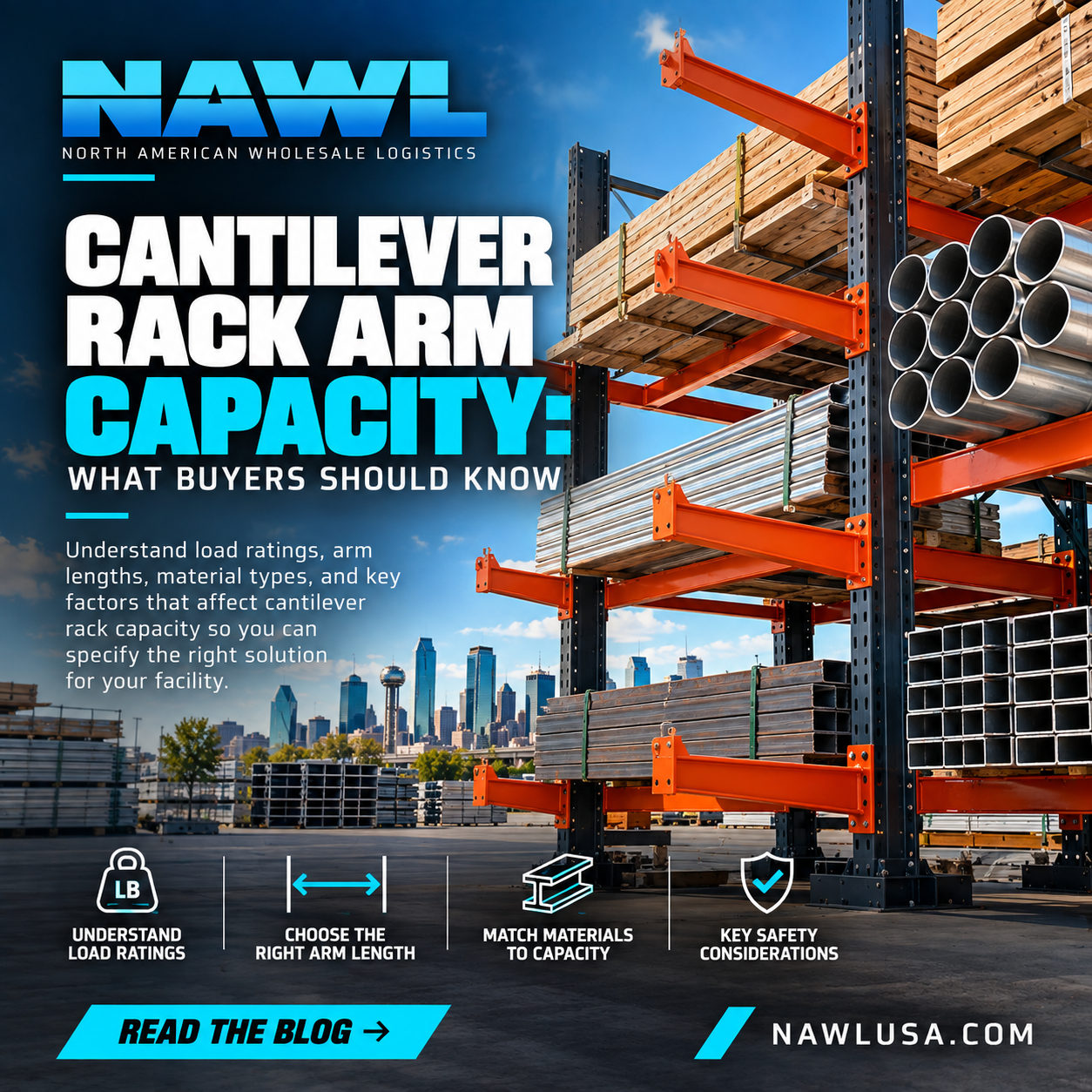
When planning a storage system for long, bulky, or oddly shaped inventory, cantilever racking is often the go-to solution. Unlike pallet rack, which uses upright frames and beams to support palletized loads, cantilever racks employ a central column with arms extending horizontally to hold products. This design offers unobstructed storage access, making it ideal for items like lumber, pipe, sheet metal, and furniture.
However, the strength and utility of a cantilever system hinge entirely on understanding its load-bearing capabilities, particularly the cantilever rack arm capacity. Misjudging this can lead to catastrophic failures, damage to goods, and serious safety hazards. This guide will help you understand what you need to know about arm capacity to make informed purchasing decisions.
The Fundamentals of Cantilever Rack Arm Capacity
At its core, cantilever rack arm capacity refers to the maximum weight a single cantilever arm can safely support. This isn't just a random number; it's a precisely engineered value determined by several factors, including the arm's length, cross-sectional dimensions, material grade, and connection method to the column.
It's crucial to understand that capacity ratings are almost always expressed per arm. If you have a rack level with two arms supporting a load, the total capacity for that level is the sum of the capacities of each arm, provided the load is distributed evenly. We'll delve into load distribution shortly.
Never assume that because one arm has a certain capacity, every arm on the system has the same. While common, variations can occur, especially with custom configurations or older systems. Always refer to the manufacturer's specifications for the specific components you are using or considering.
The Critical Role of Load Distribution
The stated cantilever rack arm capacity is based on an evenly distributed load. This is a vital concept for safety.
Imagine a 48-inch-long arm rated for 2,000 pounds. This rating assumes that 2,000 pounds is spread across the entire length of the arm, not concentrated at its very end. A concentrated load at the tip of the arm exerts significantly more bending moment and stress on the arm and its connection to the column than the same weight distributed uniformly.
- Evenly Distributed Load (EDL): The ideal scenario. The weight is spread over most, if not all, of the arm's length. This allows the arm to bear its full rated capacity.
- Uneven or Concentrated Load: If a heavy item is placed only at the end of an arm, it effectively reduces the arm's capacity and increases the risk of deflection or failure. Operators must be trained to load cantilever racks properly, avoiding point loads where possible.
Practical Implications for Loading:
- Product Length vs. Arm Length: Ensure your product is long enough to span across at least two arms, ideally with some overhang on either side to maintain stability and distribute weight effectively. Shorter items on long arms are a recipe for concentrated loads.
- Operator Training: Proper loading techniques are paramount. Forklift operators in DFW and elsewhere must understand the importance of even distribution and the dangers of overloading or improper placement.
Arm Spacing and Column Centers
While the capacity is per arm, the total system capacity and stability are heavily influenced by the spacing between arms and between columns.
- Arm Spacing: How far apart are the arms on a single level? This is determined by the length and rigidity of the product being stored. Longer, more flexible items require more arms spaced closer together to prevent sagging. Shorter, rigid items can use fewer arms spaced farther apart.
- Column Centers: This refers to the distance between the upright columns of your cantilever rack system. The span between columns directly affects the required strength of the arms and the overall stability of the system. Larger spans necessitate stronger, higher-capacity arms.
When designing a system, the product's characteristics (length, weight, rigidity) will dictate both arm spacing and the number of arms per level, which in turn influences the total load capacity per storage level.
What Buyers Should Look For
When evaluating cantilever racking, especially concerning cantilever rack arm capacity, consider these points:
- Manufacturer's Specifications: Always demand and review the manufacturer's engineering data sheets for the specific arms you are purchasing. This should clearly state the capacity per arm.
- Load Types: Be clear about the exact type of products you plan to store. Their weight, length, and rigidity are the primary drivers for determining arm length, arm capacity, and arm spacing.
- Arm Length: Cantilever arms come in various lengths. Choose arms that are appropriate for your longest product, ensuring adequate support and minimizing overhang.
- Adjustability: Many cantilever systems offer adjustable arms, allowing you to reconfigure shelf levels as your storage needs change. Ensure the adjustment mechanism is robust and secure.
- Safety Features: Look for features like end stops or retainers on the arms to prevent products from rolling or sliding off, enhancing overall safety in the warehouse. Additionally, ensure the system meets RMI (Rack Manufacturers Institute) standards.
For a broader understanding of how much weight any pallet rack holds, you can refer to our Pallet Rack Capacity 101 Guide.
The NAWL Advantage for Cantilever Systems
At NAWL, we understand the complexities of optimizing storage space and ensuring safety. Our cantilever rack systems are engineered with precision and built for durability, with clear specifications for cantilever rack arm capacity to help you make the right choice.
We offer a range of standard and custom cantilever solutions designed to meet the rigorous demands of various industries, whether you're in DFW or across the nation. Our team can help you configure a system that not only maximizes your storage density but also adheres to the highest safety standards.
Investing in a high-quality cantilever rack system with appropriate arm capacities is an investment in your operational efficiency and the safety of your personnel and products. Don't compromise on these critical factors.
Conclusion
Understanding cantilever rack arm capacity is non-negotiable for safe and effective material handling. By paying close attention to per-arm ratings, ensuring proper load distribution, and considering arm spacing and column centers, you can design a cantilever system that reliably supports your inventory and keeps your operations running smoothly. Always consult with reputable manufacturers to ensure your system meets your specific needs and all relevant safety standards.
Ready to optimize your long-item storage? Request a quote for NAWL cantilever racking today and ensure your warehouse operates with maximum capacity and safety.