Warehouse Racking in Arlington, Grand Prairie & Irving: A Buyer's Guide
August 5, 2026
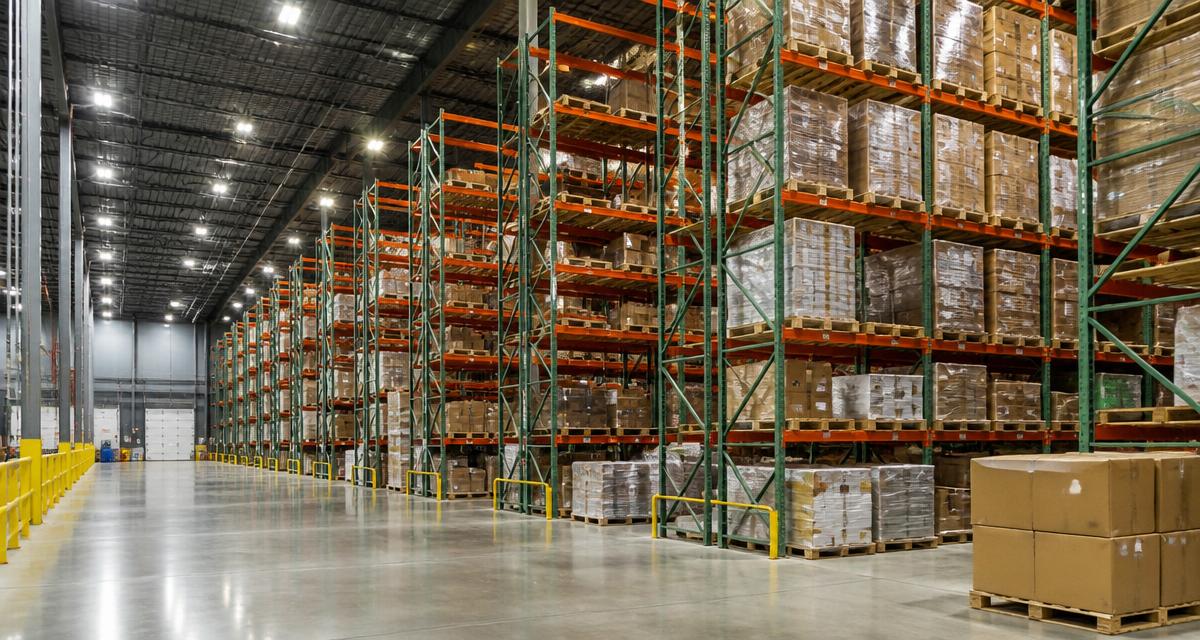
The Dallas-Fort Worth metroplex is a logistics hub, and the Mid-Cities area – specifically Arlington, Grand Prairie, and Irving – stands at its center. This region, bolstered by proximity to DFW International Airport and major interstate networks, houses numerous distribution centers, manufacturing facilities, and e-commerce fulfillment operations. Efficient space utilization is paramount to profitability here, and that begins with the right warehouse racking system. This guide provides a strategic overview for businesses looking to optimize their storage capabilities in these key Texas markets.
For warehouse managers, the right rack layout is not just a storage purchase. It affects dock flow, forklift travel distance, pick accuracy, damage rates, inventory rotation, and how quickly a facility can respond when orders spike. A good industrial racking DFW plan starts with the building, the product, and the handling process, then works backward into rack type, beam capacity, upright depth, aisle width, and installation schedule.
Understanding Your Operational Needs in the Mid-Cities
Before considering specific racking types, a thorough assessment of your operational profile is non-negotiable. For a typical Irving distribution warehouse, factors like inventory throughput, product dimensions, weight, and desired accessibility will dictate the most suitable solution. Are you handling large, heavy palletized goods, small parts, or a mix of both? What are your picking methodologies? Do you need high SKU density, or rapid access to high-volume items? The answers to these questions will narrow your options considerably.
Consider the specific nuances of your operation. Facilities near DFW airport, for instance, might prioritize quick-ship options and accessibility for air freight, while a manufacturing support center in Arlington TX might focus on bulk storage and organized component access. Your existing forklift fleet and aisle widths are also critical constraints that must be accounted for early in the planning process.
A practical needs assessment should document at least the following:
| Planning factor | Why it matters | What to verify |
|---|---|---|
| Pallet size | Determines upright depth, beam length, and overhang | Standard pallet dimensions, load width, load depth, and load height |
| Pallet weight | Drives beam capacity, frame capacity, and slab review | Maximum load, not average load |
| SKU count | Influences selectivity versus density | Number of active SKUs and reserve SKUs |
| Turn rate | Separates fast movers from slow movers | Daily, weekly, or seasonal movement by SKU |
| Lift equipment | Sets aisle width and lift height limits | Forklift type, mast height, turning radius, and battery or fuel needs |
| Building clear height | Determines usable vertical storage | Lowest obstruction, sprinkler clearance, lights, ducts, and joists |
| Dock and staging space | Prevents rack from crowding the working floor | Inbound, outbound, returns, and quality inspection areas |
Pallet size
- Why it matters
- Determines upright depth, beam length, and overhang
- What to verify
- Standard pallet dimensions, load width, load depth, and load height
Pallet weight
- Why it matters
- Drives beam capacity, frame capacity, and slab review
- What to verify
- Maximum load, not average load
SKU count
- Why it matters
- Influences selectivity versus density
- What to verify
- Number of active SKUs and reserve SKUs
Turn rate
- Why it matters
- Separates fast movers from slow movers
- What to verify
- Daily, weekly, or seasonal movement by SKU
Lift equipment
- Why it matters
- Sets aisle width and lift height limits
- What to verify
- Forklift type, mast height, turning radius, and battery or fuel needs
Building clear height
- Why it matters
- Determines usable vertical storage
- What to verify
- Lowest obstruction, sprinkler clearance, lights, ducts, and joists
Dock and staging space
- Why it matters
- Prevents rack from crowding the working floor
- What to verify
- Inbound, outbound, returns, and quality inspection areas
One common mistake is designing around the empty warehouse instead of the loaded operation. A rack plan may look efficient on paper, but if it leaves no room for staging, stretch-wrapping, forklift charging, trash handling, or damaged product quarantine, productivity suffers. Another mistake is using average pallet weight. Rack capacity should be based on the heaviest expected load in that position, including future product changes.
Common Racking Systems for DFW Warehouses
Several racking systems are widely used and offer distinct advantages depending on your requirements:
Selective Pallet Racking
This is the most common and versatile system, offering direct access to every pallet. It's ideal for a wide range of products and environments, including many warehouse racking Arlington TX installations. Selective racking is excellent for operations with high SKU counts and diverse products where immediate access is required. Its simplicity makes it relatively easy to install and reconfigure, providing flexibility as your inventory needs evolve. While it doesn't offer the highest storage density, its accessibility often outweighs this for many distribution models.
Selective racking is usually the first option to evaluate because it is simple to operate and easy for forklift drivers to understand. Typical components include upright frames, step beams, wire decking, row spacers, anchors, and column protection. Beam length is commonly selected based on pallet width and handling clearance. Upright depth is often chosen to support the pallet properly while allowing controlled overhang. The exact specification depends on load size, load weight, fire protection requirements, and forklift practices.
Selective racking fits order fulfillment, mixed-SKU distribution, manufacturing parts storage, and warehouses that change product profiles often. It is also easier to expand in phases, which helps operations that need DFW warehouse solutions without taking the entire facility offline.
Drive-In/Drive-Thru Pallet Racking
When high-density storage is the priority, especially for fewer SKUs with large quantities, drive-in or drive-thru systems are excellent choices. A pallet rack Grand Prairie facility dealing with bulk goods or cold storage often benefits from this setup. Drive-in systems operate on a Last-In, First-Out (LIFO) basis, while drive-thru allows First-In, First-Out (FIFO) access. These systems maximize vertical and floor space by eliminating aisles, but at the expense of direct pallet access.
Drive-in rack works best when each lane is dedicated to the same SKU and pallet size. Because forklifts enter the rack structure, driver training, rail protection, and load discipline matter. Pallets must be in good condition and suitable for the support method. If the facility has a high number of partial pallets, mixed lots, or frequent SKU changes, drive-in can become difficult to manage.
The key advantage is density. By reducing aisles, a drive-in layout can store more pallets in a given footprint than selective rack. The tradeoff is slower access to individual pallets and greater dependence on disciplined inventory rotation.
Push Back Racking
Push back racking offers a balance between density and selectivity. Pallets are stored on inclined carts that slide along rails, allowing up to five pallets deep per lane. When a new pallet is loaded, it pushes the previous one back. When a pallet is unloaded, the others move forward. This provides LIFO access from a single aisle and is more forgiving than drive-in systems in terms of forklift maneuvering. It's a popular choice for facilities needing higher density than selective racking but better accessibility than drive-in.
Push back racking Irving projects often make sense where a warehouse has multiple pallets per SKU, but still needs faster access than drive-in allows. It can be especially useful for staging inventory by product family, customer, route, or production batch. Since the forklift stays in the aisle, there is less rack entry compared with drive-in systems.
Important design checks include pallet quality, pallet bottom-board configuration, cart capacity, lane depth, and load stability. Loads that are poorly wrapped, top-heavy, or inconsistent in size may not perform well. Operators should also be trained not to overload lanes or force pallets into a position when the carts are not moving freely.
Pallet Flow Racking
For high-volume, time-sensitive inventory requiring strict FIFO rotation, pallet flow racking is optimal. Pallets are loaded from one aisle onto inclined rollers and flow by gravity to the picking aisle. This system is perfect for fast-moving consumer goods, food products, and date-sensitive materials. It separates loading and picking operations, improving efficiency and safety. An Irving distribution warehouse handling perishable goods or products with expiration dates would greatly benefit from this system.
Pallet flow racking Grand Prairie installations are also common where dock-to-stock and stock-to-ship velocity matter. Because loading and unloading occur on opposite sides, travel patterns can be cleaner and congestion can be reduced. This can help high-volume operations that need reliable rotation without constant manual tracking.
The details matter. Flow lane pitch, roller type, speed controllers, pallet condition, and braking all affect performance. Pallets must flow consistently without gaining unsafe speed or hanging up mid-lane. As with any engineered storage system, pallet flow should be specified around the actual pallet, not a generic catalog assumption.
A simplified comparison can help narrow the options:
| Rack type | Best for | Access method | Main advantage | Main tradeoff |
|---|---|---|---|---|
| Selective | High SKU counts and mixed inventory | Direct access | Flexible and easy to reconfigure | Lower density |
| Drive-in/Drive-thru | Large quantities of fewer SKUs | LIFO or FIFO depending on design | High density | Less selectivity |
| Push back | Multiple pallets per SKU with faster access | LIFO | Dense storage from one aisle | Not ideal for strict rotation |
| Pallet flow | Date-sensitive or high-volume goods | FIFO | Strong rotation and separated traffic | Higher design complexity |
Selective
- Best for
- High SKU counts and mixed inventory
- Access method
- Direct access
- Main advantage
- Flexible and easy to reconfigure
- Main tradeoff
- Lower density
Drive-in/Drive-thru
- Best for
- Large quantities of fewer SKUs
- Access method
- LIFO or FIFO depending on design
- Main advantage
- High density
- Main tradeoff
- Less selectivity
Push back
- Best for
- Multiple pallets per SKU with faster access
- Access method
- LIFO
- Main advantage
- Dense storage from one aisle
- Main tradeoff
- Not ideal for strict rotation
Pallet flow
- Best for
- Date-sensitive or high-volume goods
- Access method
- FIFO
- Main advantage
- Strong rotation and separated traffic
- Main tradeoff
- Higher design complexity
Key Considerations for Installation and Compliance
Beyond selecting the right racking type, consider the structural integrity of your facility and local regulations. All warehouse racking systems must be engineered and installed according to applicable codes, including seismic considerations relevant to Texas. Permitting and inspections are standard procedures. Ensure your chosen provider is experienced with projects in the Arlington, Grand Prairie, and Irving areas and can manage the full scope from design to installation and post-installation support.
Working with an experienced provider ensures that your system adheres to RMI (Rack Manufacturers Institute) standards and local building codes. This protects your investment, your inventory, and most importantly, your personnel. Regular inspections and maintenance are also crucial to the longevity and safety of your warehouse racking.
Installation planning should start before material arrives. Confirm slab condition, anchor requirements, sprinkler clearances, building column locations, door swing areas, dock traffic, fire exits, and lighting. Rack should not block electrical panels, emergency equipment, or required travel paths. If rack is being installed in an active facility, the plan should include traffic control, staging areas, lift access, and a sequence that limits disruption.
A basic install and inspection checklist includes:
| Step | What to confirm |
|---|---|
| Layout verification | Row lengths, aisle widths, building columns, and egress routes match the approved plan |
| Component check | Uprights, beams, braces, decking, anchors, and accessories match the specification |
| Plumb and level | Frames are installed straight and within acceptable tolerance |
| Anchoring | Anchors are properly located, installed, and tightened per the design requirements |
| Beam engagement | Beam connectors are fully seated and safety locks are installed |
| Load plaques | Capacity information is visible and matches the engineered design |
| Final walkthrough | Damage, missing hardware, blocked clearances, or layout deviations are corrected |
Layout verification
- What to confirm
- Row lengths, aisle widths, building columns, and egress routes match the approved plan
Component check
- What to confirm
- Uprights, beams, braces, decking, anchors, and accessories match the specification
Plumb and level
- What to confirm
- Frames are installed straight and within acceptable tolerance
Anchoring
- What to confirm
- Anchors are properly located, installed, and tightened per the design requirements
Beam engagement
- What to confirm
- Beam connectors are fully seated and safety locks are installed
Load plaques
- What to confirm
- Capacity information is visible and matches the engineered design
Final walkthrough
- What to confirm
- Damage, missing hardware, blocked clearances, or layout deviations are corrected
After installation, inspections should continue. Forklift impacts, overloaded beams, missing safety pins, bent braces, damaged anchors, and displaced wire decking are common findings in busy warehouses. Supervisors should know when to unload a bay and take it out of service until it is evaluated. Small rack damage can turn into a serious hazard when ignored.
Partnering for Success
Investing in warehouse racking is a significant decision that impacts efficiency, safety, and profitability. For businesses operating an Irving distribution warehouse, or any facility requiring robust pallet rack Grand Prairie or Arlington TX solutions, partnering with a knowledgeable manufacturer and installer is crucial. Look for a partner who understands the unique demands of the DFW logistics landscape and can provide tailored, engineered solutions.
A strong partner should ask hard operational questions before quoting steel. They should review pallet data, load weights, forklift clearances, fire protection constraints, growth plans, and the required schedule. For quick-turn projects, stocked components can reduce lead time, but the design still needs to be right. Buying rack only by price per beam or frame can lead to mismatched capacities, awkward aisles, or layouts that fail inspection.
If your facility is growing, compare the cost of new rack with the cost of poor space utilization. Extra off-site storage, excessive forklift travel, slow picking, and product damage all have real operating costs. The best warehouse storage systems Texas facilities use are built around both capacity and flow.
Ready to optimize your warehouse space? Contact us today for a personalized assessment and quote tailored to your specific needs in Arlington, Grand Prairie, or Irving.
Frequently asked questions
What is the best warehouse racking for Arlington TX facilities?
Selective racking is often the best starting point for warehouse racking Arlington TX projects because it provides direct access to every pallet and works well with mixed SKUs. If the operation has fewer SKUs and higher pallet counts, drive-in, push back, or pallet flow may improve density.
How do I choose between push back and pallet flow racking?
Choose push back when you need higher density and can operate on LIFO rotation. Choose pallet flow when FIFO rotation is required, especially for date-sensitive or high-volume inventory. Pallet condition, load stability, and throughput should be reviewed before either system is specified.
Can rack be installed while my warehouse is operating?
Yes, many projects are phased around active operations. The key is planning. Material staging, forklift routes, install zones, and safety barriers should be defined before crews start work. Some areas may need to be temporarily shut down during anchoring or overhead work.
What information is needed for a pallet rack quote?
A useful quote starts with pallet dimensions, maximum pallet weight, clear height, building layout, forklift type, desired storage positions, and inventory rotation needs. Photos, drawings, or a walkthrough can help identify obstructions and code-related constraints.
How often should warehouse racking be inspected?
Rack should be visually checked on a regular basis and after any forklift impact. Busy facilities often benefit from routine documented inspections. Damaged components, missing locks, overloaded bays, and displaced anchors should be addressed before the rack is returned to normal service.