Pallet Rack Anchors in Dallas: When & Why They Matter
September 17, 2026
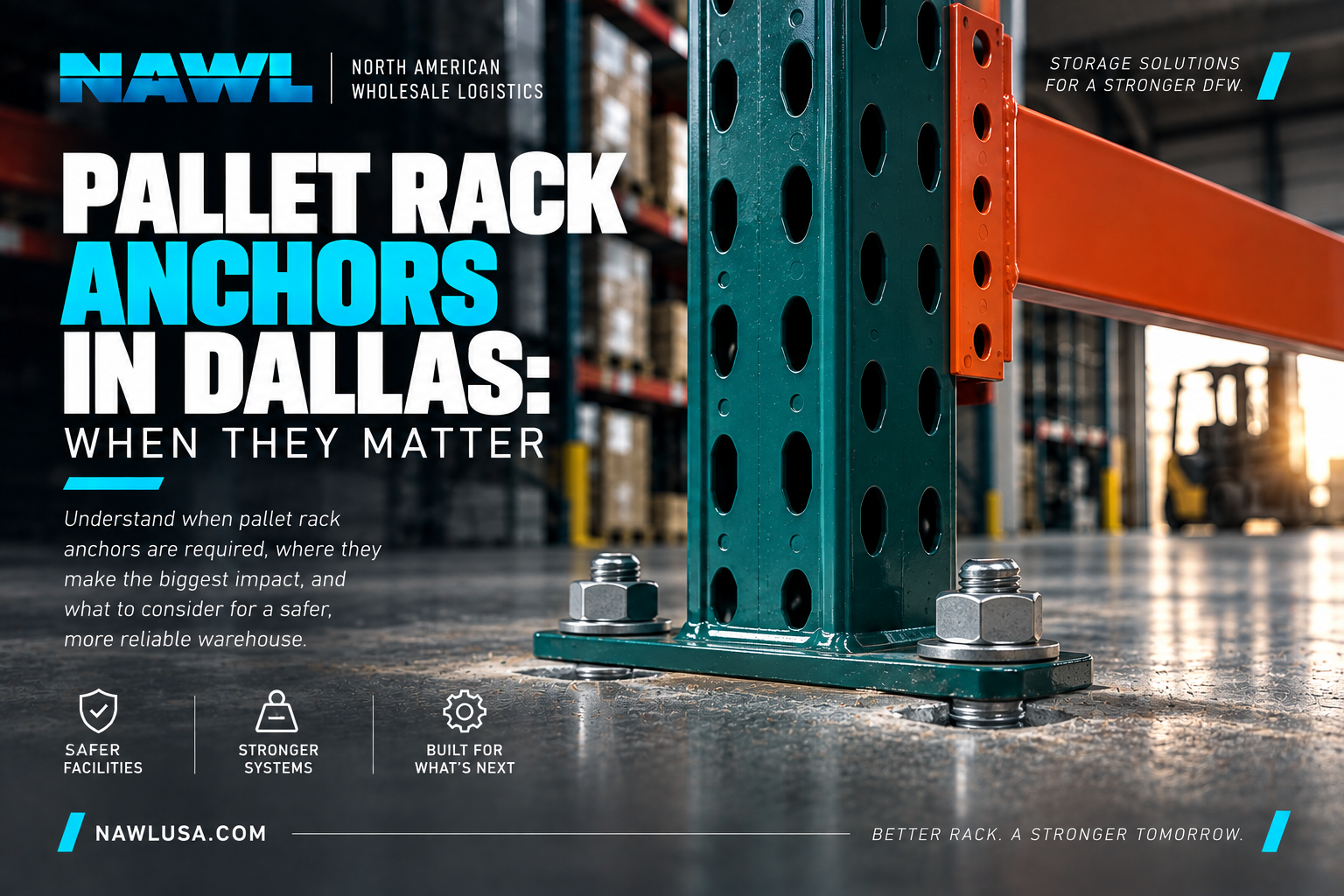
Every warehouse manager in Dallas knows that efficient, safe storage is non-negotiable. While pallet rack systems are robust, their stability isn't inherent; it's engineered. Crucial components often overlooked, yet vital for safety and compliance, are pallet rack anchors. Ignoring their importance can lead to catastrophic failure, injury, and significant financial loss. This post will detail why pallet rack anchors matter in Dallas, when they are required, and what factors you need to consider for secure installation.
The Non-Negotiable Necessity of Pallet Rack Anchors in Dallas
Pallet rack systems, by their design, are tall structures. When loaded with thousands of pounds of inventory, they represent a significant potential hazard if not properly secured. The primary purpose of pallet rack anchors is to prevent the rack system from overturning, sliding, or walking. This is crucial for several reasons:
- Seismic Activity: While not as prone to major earthquakes as other regions, Dallas and the surrounding North Texas area are not immune to seismic events. Even minor tremors can destabilize an unanchored rack system, especially one that is heavily loaded or tall. Anchors ensure the rack remains fixed to the floor, resisting lateral forces.
- Impact Protection: Forklifts are indispensable in warehouses, but they are also a leading cause of rack damage. An accidental impact from a forklift can shift or even topple an unanchored rack. Properly installed anchors provide resistance, absorbing some of the impact and keeping the structure upright, mitigating potential collapse.
- Dynamic Loading/Unloading: The constant movement of pallets onto and off of racks creates dynamic stresses. These forces, over time, can cause racks to shift or walk across the floor. Anchors counteract these forces, maintaining the rack's intended position and structural integrity.
- Compliance and Liability: OSHA regulations and local Dallas building codes mandate anchoring for most pallet rack installations. Non-compliance can result in hefty fines, operational shutdowns, and severe liability in the event of an accident. Ensuring your pallet rack anchors in Dallas installation meets these standards protects your team and your business.
When Are Pallet Rack Anchors Required?
The general rule of thumb is simple: virtually all pallet rack installations require anchoring. There are very few exceptions, typically involving extremely short racks with minimal load, or specific mezzanine-integrated systems where the rack is structurally part of the building. However, for most standard Selective, Drive-In, Push-Back, Pallet Flow, or Carton Flow systems, anchors are a must.
Specific requirements often hinge on several factors:
- Height-to-Depth Ratio: As a general guideline, if the height of your rack (measured to the top of the highest beam) is more than six times its depth (front to back of the upright), anchoring is almost certainly required. The taller and shallower the rack, the more unstable it is.
- Location: As mentioned, seismic considerations in Dallas make anchoring a priority. Local building codes often incorporate national standards (like IBC – International Building Code) that specify anchoring requirements based on geographic location and seismic risk.
- Load Capacity: The heavier the loads stored on the rack, the greater the forces it exerts on the floor and the more critical it is to anchor it securely.
- Rack Type: While all rack types benefit from anchoring, some, like very tall selective racks or drive-in racks that interact directly with forklifts, have particularly stringent anchoring needs.
Always consult the manufacturer's installation guidelines and local building codes for precise requirements regarding your specific rack system and facility in Dallas.
Critical Considerations for Anchor Installation
Installing pallet rack anchors in Dallas isn't just about drilling holes and tightening bolts; it's about understanding the environment and the components. Here are key considerations:
The Concrete Slab
- Thickness and Condition: The integrity of your concrete floor is paramount. Anchors require a minimum concrete thickness, typically 4 to 5 inches, to achieve their rated pull-out strength. If your slab is thinner, cracked, or degraded, it may not adequately support the anchors. Pre-installation slab inspection is vital.
- Reinforcement (Rebar/Mesh): Drilling into rebar can significantly weaken the anchor's hold and damage the drill bit. Installers must understand the slab's construction to avoid rebar where possible or use specialized drilling techniques. Concrete scanning equipment can detect rebar before drilling.
- Anchor Type: Different anchor types (e.g., wedge anchors, drop-in anchors, screw anchors) are suited for various concrete conditions and load requirements. Wedge anchors are common for pallet racking due to their reliability and strength. Ensure the anchor's diameter and length match the engineering specifications for your rack system and slab.
The Role of Shims
Warehouse floors are rarely perfectly level. Shims are thin plates placed under the rack upright's base plate to compensate for unevenness. They are critical for distributing the load evenly across the entire base plate and preventing racking components from twisting or bending. An anchor installed into an unshimmed or poorly shimmed upright can become loose or fail prematurely. Always ensure shims are used to achieve a plumb and level installation before tightening anchors.
Professional Installation and Inspection
Given the safety implications, professional installation is non-negotiable. Certified installers understand:
- Manufacturer Specifications: Adhering to the rack manufacturer's specific anchoring patterns and bolt torque requirements.
- Local Codes: Navigating Dallas-specific building codes and safety regulations.
- Best Practices: Employing proper drilling techniques and depth, and ensuring anchors are torqued to the correct specifications for optimal hold.
- Post-Installation Verification: A final inspection ensures all anchors are correctly installed and torqued, and the rack system is plumb, level, and square.
Don't Skimp on Safety: Invest in Proper Anchoring
For warehouse managers, distributors, and dealers in Dallas, understanding and implementing proper pallet rack anchoring is not merely a suggestion – it's a fundamental requirement for operational safety, regulatory compliance, and asset protection. From the quality of your concrete slab to the type of anchor and the precision of installation, every detail matters. Don't compromise on these vital Accessories that ensure your storage systems stand strong.
At NAWL, we don't just sell pallet racking; we provide the expertise to ensure your entire system is safe and compliant. We can assist you with your pallet rack requirements, including the necessary anchors and accessories for your Dallas facility. Find out more about our offerings and how we can support your warehouse needs. Learn more about our pallet rack accessories here. If you're planning a new installation or reviewing an existing one, reach out to our team.
Ready to secure your warehouse with reliable racking solutions and proper anchoring? Request a quote from NAWL today and ensure your Dallas operations are built on a foundation of safety and strength.