New vs. Used Pallet Racking in Dallas: Cost, Risk, Availability
September 14, 2026
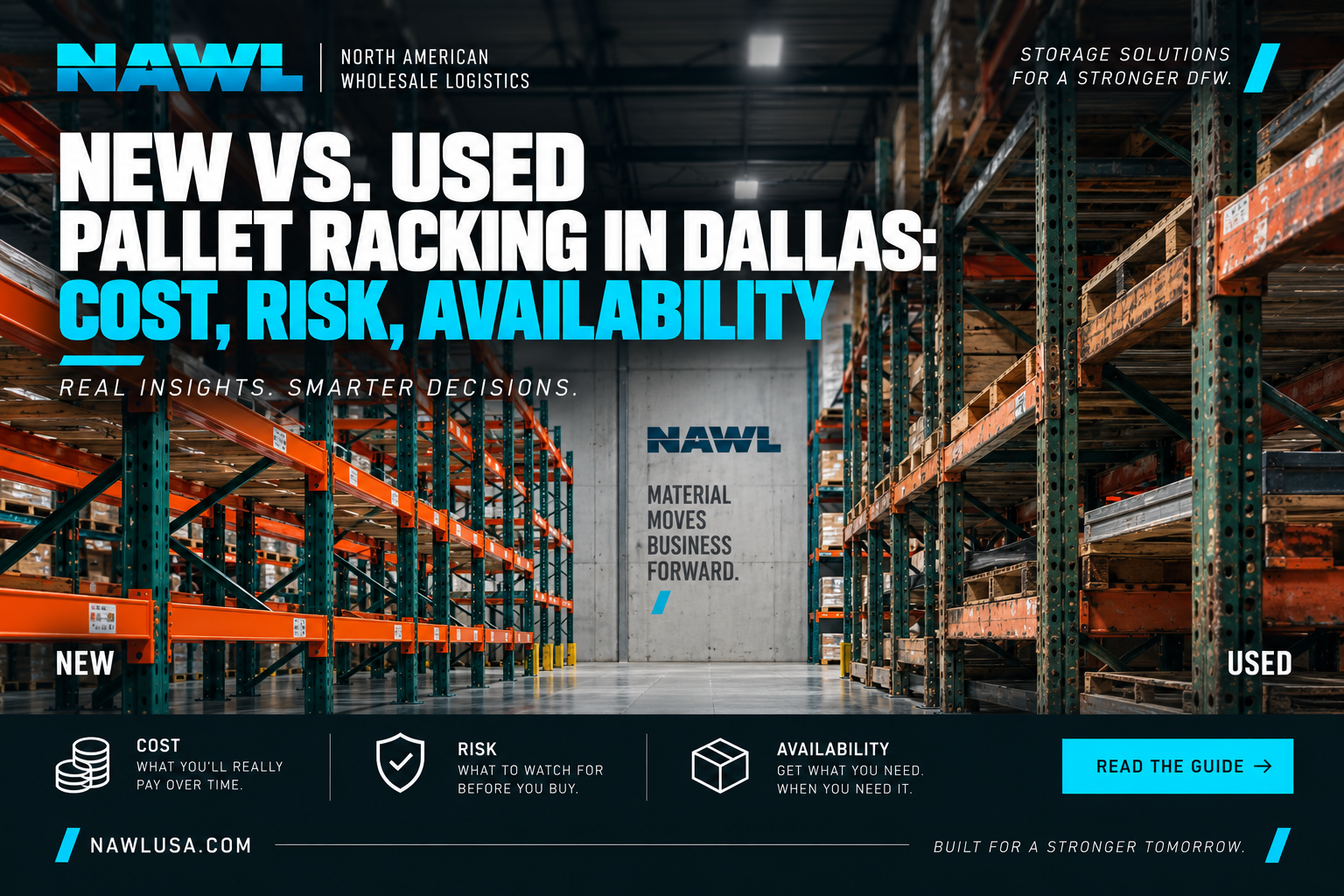
For warehouse managers, distributors, and dealers in Dallas, the decision between new and used pallet racking is a critical one. It impacts budget, operational efficiency, and, most importantly, safety. While the allure of lower upfront costs for used equipment can be strong, it’s essential to understand the full scope of that comparison. This post breaks down the key factors: cost, risk, and availability to help you make an informed decision for your facility in Dallas.
Understanding the True Cost: New vs. Used
When evaluating new vs. used pallet racking in Dallas, the initial sticker price is just one piece of the puzzle. A comprehensive cost analysis goes deeper.
New Pallet Racking: Transparent Investment
New pallet racking comes with a clear, upfront price. This cost typically includes:
- Material and Manufacturing: High-grade steel, precision engineering, and often durable powder-coat finishes.
- Warranty: Most new racking systems come with a manufacturer's warranty, covering defects and ensuring quality for a defined period. This minimizes future repair costs.
- Design and Engineering Support: Reputable manufacturers provide engineering services to ensure the racking system meets specific load requirements, seismic codes (relevant in many areas, though less critical in
Dallas), and local building permits. This prevents costly redesigns or structural failures down the line. - Consistent Availability: When you order new, you get what you need, when you need it. There’s no piecemeal purchasing or waiting for specific components to appear on the market.
- Lead Time: While historically longer, supply chain improvements have made lead times for new racking more predictable. Reputable manufacturers can often provide quick-ship options for common components.
Used Pallet Racking: Hidden Expenses and Uncertainties
Used pallet racking often presents a lower per-piece cost. However, these initial savings can be quickly eroded by unforeseen expenses and complications:
- Inconsistent Condition: Used racking varies wildly in condition. You might find components with dents, bends, rust, or compromised structural integrity. These often require repair or replacement, adding to your actual cost.
- Lack of Documentation: Critical information like original manufacturer specifications, load capacities, and engineering drawings is frequently missing. Without this, calculating safe load limits becomes dangerous guesswork or requires expensive third-party engineering assessments.
- Compatibility Issues: Mixing and matching used components from different manufacturers is a common trap. While they might visually appear similar, frame connections, beam dimensions, and safety lock mechanisms are rarely interchangeable. This leads to unstable structures and safety hazards.
- Refurbishment Costs: Many used racking systems require cleaning, repainting, and component replacement before installation. These are direct costs that eat into initial savings.
- Freight and Handling: Transporting used racking can be more complicated and costly due to nonstandardized bundles or odd component sizes.
The Risks Involved: Safety and Compliance
Beyond cost, the risks associated with used pallet racking can be substantial, impacting employee safety, inventory, and regulatory compliance.
Safety Concerns
- Compromised Structural Integrity: Even minor dents or bends in uprights and beams can significantly reduce the load-bearing capacity of racking. Unlike new racking, which is designed to specific tolerances, used racking often has unknown damage histories.
- Incorrect Capacity: Without manufacturer data or engineering certification, you cannot definitively know the safe weight capacity of used beams and frames. Overloading, even inadvertently, can lead to catastrophic collapse.
- Missing or Damaged Safety Components: Beam safety clips, column protectors, and row spacers are often missing or damaged in used racking lots. These small components play a critical role in preventing beam dislodgment and ensuring overall system stability.
- Installation Challenges: Used racking, particularly if it's a mismatched assortment, can be notoriously difficult and time-consuming to install correctly and safely.
Compliance and Liability
- OSHA Compliance: OSHA requires that racking systems be designed, installed, and maintained to prevent collapse and ensure safety. Without proper documentation and verifiable condition, achieving and proving compliance with used racking is a significant challenge. Fines and penalties for noncompliance can be severe.
- Insurance Implications: In the event of a racking failure, your insurance carrier may deny claims or increase premiums if the system's integrity cannot be verified, especially if used components were installed without proper engineering review.
- Legal Liability: Should an incident occur due to racking failure, the liability for injuries or damages could fall squarely on the warehouse operator, particularly if due diligence regarding the racking's condition and capacity was not performed.
Availability and Lead Time: What to Expect in Dallas
Availability is a crucial factor, especially when you need to expand or reconfigure quickly. Here’s how new and used options stack up in the Dallas market.
Used Racking Availability: A Gamble
- Limited Selection: The used racking market is opportunistic. You buy what's available, not necessarily what you need. This often means compromising on dimensions, styles, or specific components.
- Inconsistent Quality: As discussed, the quality of used racking can vary widely, making it difficult to source a consistent, reliable supply.
- Piecemeal Procurement: Often, you can't find an entire system from a single source. This forces you to buy components from multiple vendors, increasing freight costs and the risk of incompatibility.
- Unpredictable Lead Times: Finding the right used racking can take weeks or months. Once found, inspection, cleaning, and necessary repairs add to the delay.
New Racking Availability: Planned and Reliable
- Guaranteed Consistency: New racking offers consistent quality, dimensions, and specifications. You get exactly what you order.
- Reliable Supply Chain: Reputable manufacturers have established supply chains and production schedules. While lead times exist, they are generally predictable. For common configurations, quick-ship programs can often deliver components within days or a few weeks.
- Customization: New racking allows for custom designs and specific component sizes to perfectly match your warehouse layout and operational needs.
- Full System Solutions: You can order a complete, engineered system, ensuring all components are compatible and meet required load capacities.
Making the Right Choice for Your Dallas Operations
While the initial outlay for new pallet racking may be higher, the long-term benefits in terms of safety, compliance, consistent performance, and peace of mind generally far outweigh the perceived savings of used equipment. For operations in Dallas prioritizing safety, efficiency, and predictable budgeting, new racking is almost always the superior investment.
When considering new vs. used pallet racking in Dallas, remember that safety should never be compromised for a lower price point. A collapse or serious injury will always cost more than investing in a safe, reliable, and compliant new system.
For a robust, reliable, and expertly designed storage solution that meets all safety and operational requirements, choose new pallet racking. Ensure your Dallas operations are built on a foundation of certainty, not speculation.
Ready to equip your Dallas warehouse with top-tier storage solutions? Request a quote from NAWL today and speak with our experts to design a system tailored to your exact needs. We offer rapid delivery on quick-ship components and complete system solutions.