Cantilever Rack Capacity Chart
October 19, 2026
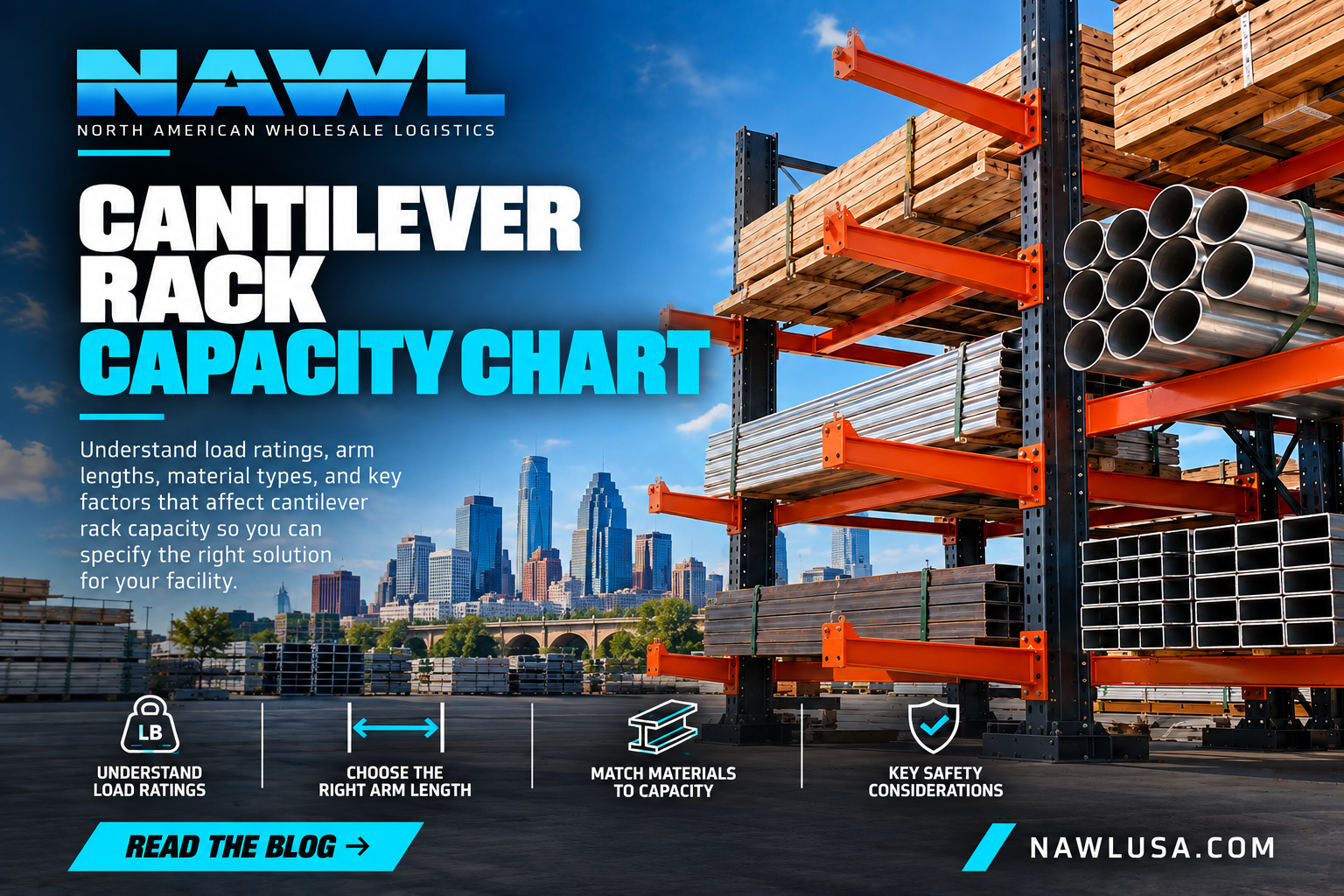
A cantilever rack capacity chart shows two separate numbers: capacity per arm and capacity per column/base, both of which must be checked independently. Capacity is engineered based on arm length/gauge and column height/design, and a generic published chart should be confirmed against a site-specific, engineer-stamped drawing — especially for outdoor Minnesota installations affected by snow and frost loads.
Treat any published capacity number — including the reference chart below — as a starting point, not a final answer for your specific installation.
How do I read a cantilever rack capacity chart?
Every cantilever system has two capacity ratings that both matter: the arm's individual capacity, and the column/base's total capacity across all the arms mounted to it. A common mistake is checking only one of these — for example, confirming the base can handle a heavy total load without verifying that any single arm isn't overloaded beyond its own individual rating.
What factors affect cantilever rack arm and column capacity?
- Arm length and gauge — longer arms and thinner gauge steel reduce capacity; shorter, heavier-gauge arms hold more
- Column height — taller columns generally have somewhat reduced capacity per arm position due to the added leverage on the base
- Base design — single- vs. double-sided bases distribute load differently
- Indoor vs. outdoor use — outdoor installations carry additional engineering considerations (see below) that a generic capacity number doesn't reflect
General cantilever capacity reference
| Arm Length | Column Height | Base Type | Arm Capacity (lbs) | Column Capacity (lbs) |
|---|---|---|---|---|
| 4 ft | 8 ft | Single | 1,500–2,500 | 8,000–12,000 |
| 6 ft | 10 ft | Single or double | 2,000–3,500 | 12,000–18,000 |
| 8 ft | 12 ft | Double | 2,500–4,500 | 18,000–25,000 |
| 10+ ft | 14+ ft | Double | 3,000–6,000+ | 25,000+ |
4 ft
- Column Height
- 8 ft
- Base Type
- Single
- Arm Capacity (lbs)
- 1,500–2,500
- Column Capacity (lbs)
- 8,000–12,000
6 ft
- Column Height
- 10 ft
- Base Type
- Single or double
- Arm Capacity (lbs)
- 2,000–3,500
- Column Capacity (lbs)
- 12,000–18,000
8 ft
- Column Height
- 12 ft
- Base Type
- Double
- Arm Capacity (lbs)
- 2,500–4,500
- Column Capacity (lbs)
- 18,000–25,000
10+ ft
- Column Height
- 14+ ft
- Base Type
- Double
- Arm Capacity (lbs)
- 3,000–6,000+
- Column Capacity (lbs)
- 25,000+
This is a general reference chart. Actual capacity depends on your specific configuration and should be confirmed with a site-specific, engineer-stamped drawing — particularly for outdoor installations in Minnesota, where snow load and frost-heave engineering can affect the safe rating. See our snow load and bracing requirements guide for details.
Why might my actual cantilever capacity differ from a published chart?
A generic chart doesn't know your specific location's frost depth, whether your installation is covered or open, or your soil conditions — all of which can affect the safe, real-world capacity of an outdoor system beyond what a standard published number reflects. This is exactly why we recommend a site-specific review for any outdoor installation rather than loading a system strictly to a generic chart's number.
Frequently asked questions
What if my existing rack has no visible capacity signage? We can help assess an unmarked or older system and determine safe capacity based on its actual configuration.
Does capacity differ for used/take-out cantilever equipment? Generally the rated capacity is the same as when new, assuming no structural damage — but any used equipment should be inspected first. See our new vs. used cantilever guide.
Where do arm-specific and base-specific capacity details live? See our cantilever rack arms and cantilever rack bases and columns pages for deeper detail on each component.
Ready for a site-specific capacity analysis?
Request a site-specific capacity and load analysis for your cantilever installation.
Request a Site-Specific Capacity Analysis →