Matching a Cantilever Base to Your Deepest Arm
November 3, 2026
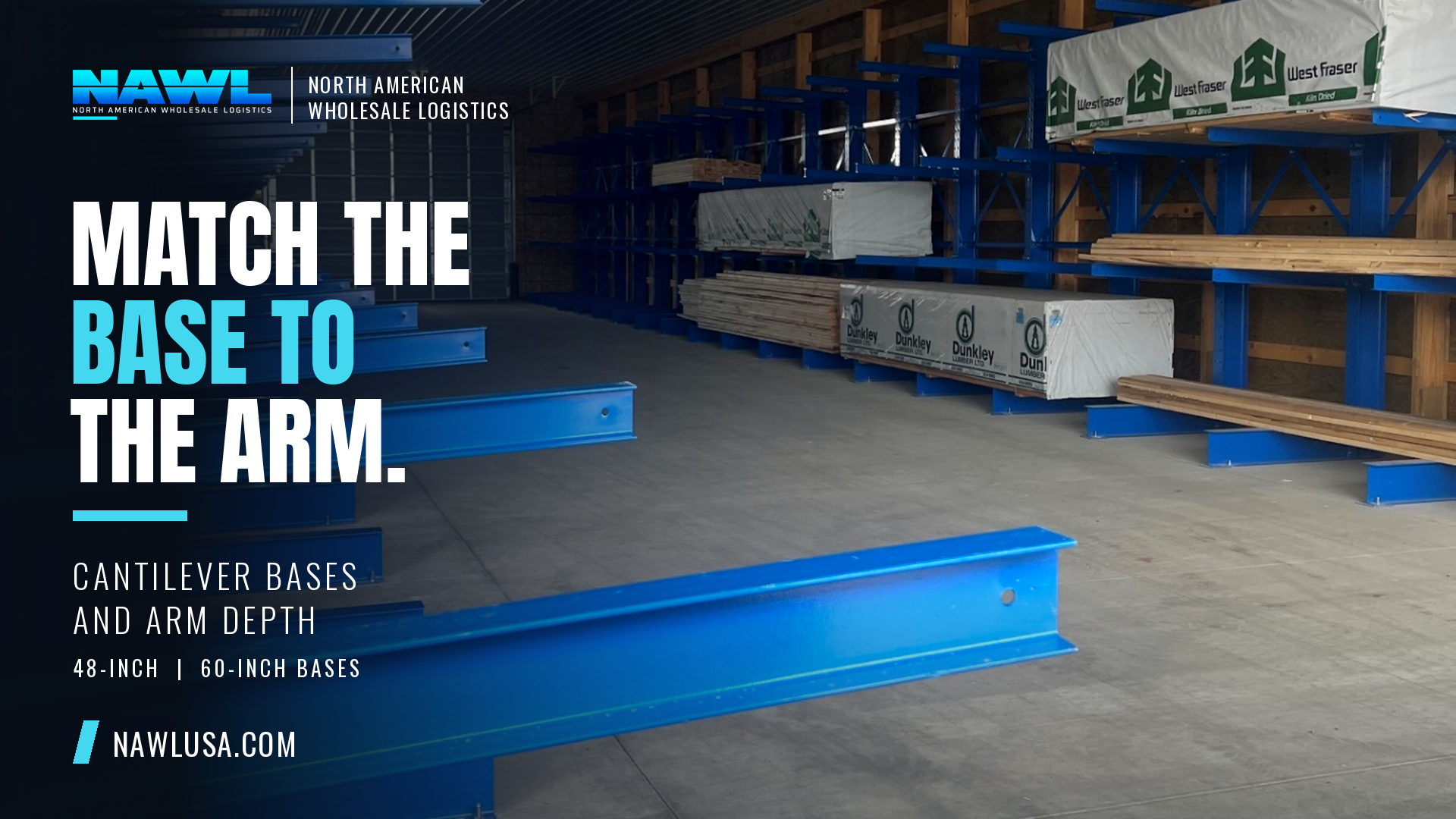
Size the base to the deepest arm that will ever sit on the column. NAWL's stock bases come in 48-inch and 60-inch sizes, each matched to the deepest arm, and they bolt to the floor. If you plan to use 60-inch arms now or later, choose the 60-inch base at the start.
The base is what keeps the column from tipping under a loaded arm, so a base that is too small for the arm undermines the whole system.
What are the stock base sizes?
| Base | Matches arm | Use |
|---|---|---|
| 48 in | Up to 48 in arms | Narrower stock, lighter runs |
| 60 in | Up to 60 in arms | Wider stock, heavier runs |
48 in
- Matches arm
- Up to 48 in arms
- Use
- Narrower stock, lighter runs
60 in
- Matches arm
- Up to 60 in arms
- Use
- Wider stock, heavier runs
A 60-inch base can carry shorter arms too, but a 48-inch base should not carry 60-inch arms. When in doubt, size up.
What if I use mixed arm lengths?
Many yards run 48-inch arms on upper levels for lighter stock and 60-inch arms on lower levels for heavy bundles. The base follows the deepest arm. If any level on the column has a 60-inch arm, use the 60-inch base. See 48-inch vs. 60-inch cantilever arms.
What about double-sided columns?
On a double-sided column, arms project both ways, so check the deepest arm on either side. The base must handle the deepest one. Balanced loading helps. See single-sided vs. double-sided cantilever rack.
How is the base anchored?
Stock components are anchor-ready and bolt to the floor. Indoors, that usually means anchoring through the base plate into a slab. Before you drill, confirm slab thickness and check for post-tensioned cables or in-slab heat tubing, which can be present in some buildings. See anchoring cantilever bases to an indoor slab.
Outdoors, NAWL's product page calls for anchoring to a concrete pad at least 6 inches thick. In Minnesota, frost heave and soil conditions can call for more than the minimum, so have a local engineer confirm footing design. See outdoor cantilever concrete pads and frost depth.
Why does base size matter in winter?
Frost can lift a poorly supported base unevenly, tilting the column. A wider base on a proper pad resists that better than a narrow one on shallow ground. Inspect plumb each spring. See freeze-thaw, slab cracks and keeping bases plumb.
How do I plan base spacing?
Base spacing follows column spacing along the row. Space columns so long stock rests on at least two, and ideally three, supports. Use the bill of materials for a three-column run as a template.
What else should I order with bases?
Ask your supplier about anchors, shims for leveling, and arm end stops. Do not reuse old anchors in a new location. NAWL supplies cantilever rack and components and does not install, so your crew or installer handles anchoring and plumb.
What should I check before ordering?
- The deepest arm you will use now or in the next few years
- Single- or double-sided layout
- Floor type: slab, pad, gravel or asphalt, since only a proper slab or pad should carry anchored bases
- Column height, since taller columns put more leverage on the base
- Whether the area will see snow, ice or standing water
Asphalt and gravel are not suitable for anchoring a loaded cantilever base. If your yard surface is soft or uneven, plan a concrete pad. Pour it before the stock arrives, and allow cure time, which runs longer in cold weather. See ordering cantilever in winter for a spring buildout.
Frequently asked questions
Can I put a 48-inch base under 60-inch arms? No. Size the base to the deepest arm.
Do I need shims? If the floor is not level, yes. Confirm on your quote.
Can I move bases later? Yes, but unload first and re-anchor correctly.
Need bases matched to your arms?
Send your arm lengths, column height and floor or pad details, and we will quote matching bases.