Cantilever Rack Snow Load & Bracing Requirements
October 18, 2026
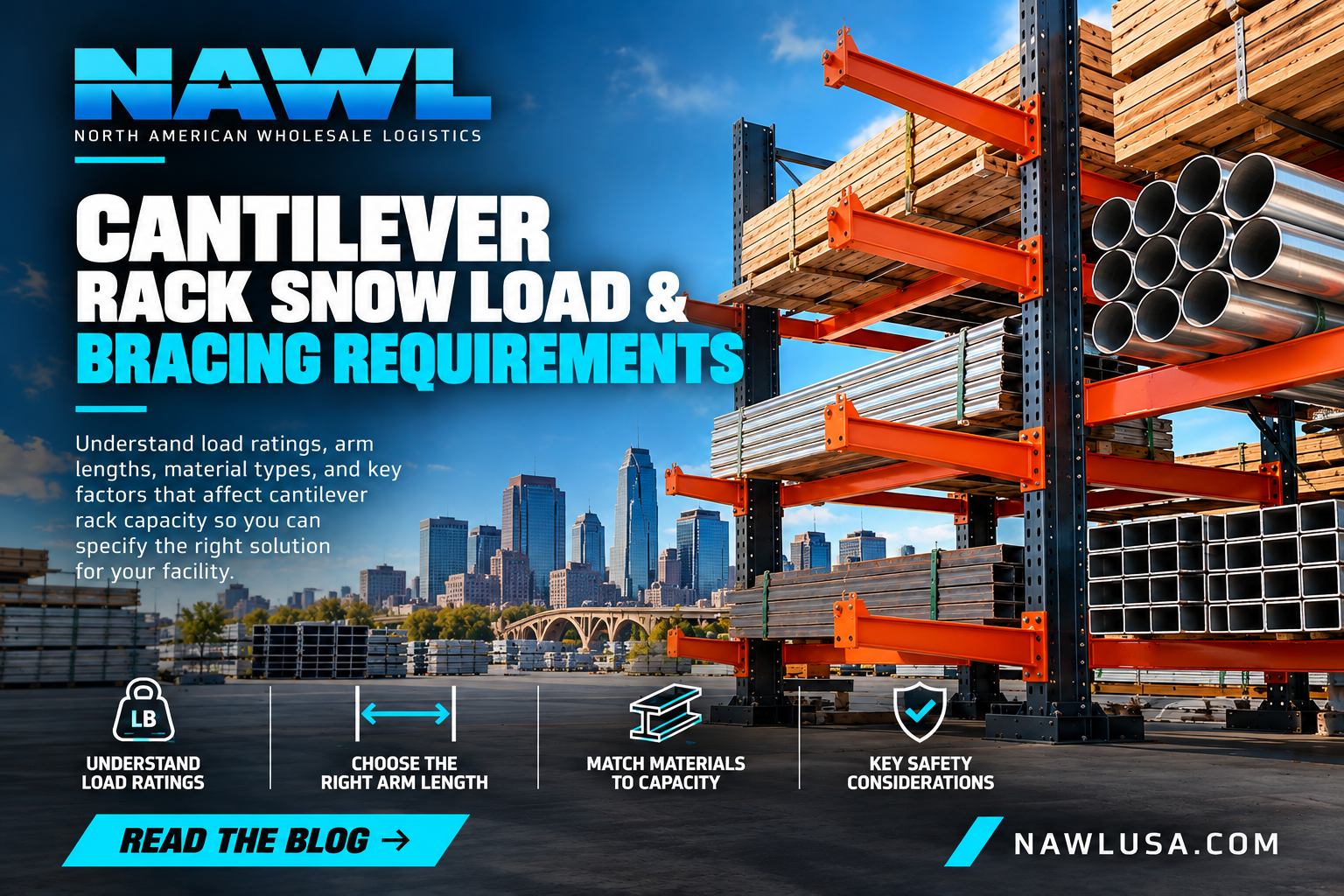
Covered or canopy-topped cantilever systems in Minnesota need snow load bracing rated for local ground snow load values, which vary by county, while all outdoor footings need to be set below the regional frost line to prevent frost heave. Site-specific, engineer-stamped drawings are strongly recommended rather than relying on a generic national spec.
Most cantilever racking sold in Minnesota carries a generic national spec sheet with no reference to local ground snow load or frost depth. Here's what actually needs to be checked for an outdoor installation in this region.
Does cantilever racking need special snow load bracing in Minnesota?
Only for covered or canopy-topped structures — an open, uncovered arm system doesn't carry a snow-load requirement since there's no roof surface for snow to accumulate on. But if your cantilever system has a canopy or roof structure over it (common for weather protection over building materials or equipment), that structure needs bracing rated for your local ground snow load value, which is set by county and varies meaningfully across our service area.
How does frost heave affect cantilever rack stability over time?
Frost heave is a slower, less obvious risk than snow load, but arguably more important to get right upfront. Outdoor footings that aren't set below the local frost line are subject to the ground's freeze-thaw cycle pushing and settling the footing slightly each winter. A single season of this might not be noticeable, but repeated over several years it can gradually shift a base out of plumb — even though the column and arms themselves are perfectly rated for the load. This ties directly into our cantilever bases and footings guide, which covers recommended footing depth by region.
| Region | Ground Snow Load (psf) | Frost Line Depth | Notes |
|---|---|---|---|
| Twin Cities Metro | ~30–35 psf | 40–48 in | Baseline for most of our metro installs |
| St. Cloud | ~35–40 psf | 45–52 in | Slightly higher snow load and frost depth than metro |
| Rochester | ~30–35 psf | 42–48 in | Comparable to metro |
| Duluth | ~50–60 psf | 55–65 in | Highest snow load and deepest frost line in our service area |
| Eau Claire, WI | ~35–40 psf | Comparable to metro | Wisconsin-side values are broadly similar |
Twin Cities Metro
- Ground Snow Load (psf)
- ~30–35 psf
- Frost Line Depth
- 40–48 in
- Notes
- Baseline for most of our metro installs
St. Cloud
- Ground Snow Load (psf)
- ~35–40 psf
- Frost Line Depth
- 45–52 in
- Notes
- Slightly higher snow load and frost depth than metro
Rochester
- Ground Snow Load (psf)
- ~30–35 psf
- Frost Line Depth
- 42–48 in
- Notes
- Comparable to metro
Duluth
- Ground Snow Load (psf)
- ~50–60 psf
- Frost Line Depth
- 55–65 in
- Notes
- Highest snow load and deepest frost line in our service area
Eau Claire, WI
- Ground Snow Load (psf)
- ~35–40 psf
- Frost Line Depth
- Comparable to metro
- Notes
- Wisconsin-side values are broadly similar
Do I need an engineer-stamped drawing for outdoor cantilever racking in Minnesota?
We strongly recommend it for any outdoor installation, rather than relying solely on a generic published spec sheet. A stamped, site-specific drawing accounts for your exact location's snow load and frost depth values, your specific load requirements, and your site's soil conditions — all of which a one-size-fits-all national chart can't capture. Treat any generic capacity or bracing number you find published online as a starting reference point, not a substitute for that review — see our cantilever capacity chart for more on this distinction.
Frequently asked questions
Can an existing under-braced system be retrofitted? Often yes, particularly for footing depth — this typically requires excavation and repouring rather than a surface-level fix, and we can assess this during a site visit.
Is the difference between snow load and wind load significant here? Snow load is the primary concern for covered structures in this region; wind load is a secondary factor but generally less demanding here than in some other parts of the country.
Does this affect installation timelines? Yes — see our installation guide for how footing excavation and concrete cure time factor into scheduling, especially in winter.
Ready for an engineering review?
Request a site-specific engineering review for your outdoor cantilever installation, accounting for your exact location's snow load and frost depth.
Request a Site-Specific Engineering Review →