Warehouse Racking DFW: Improve Storage Without Moving
September 9, 2026
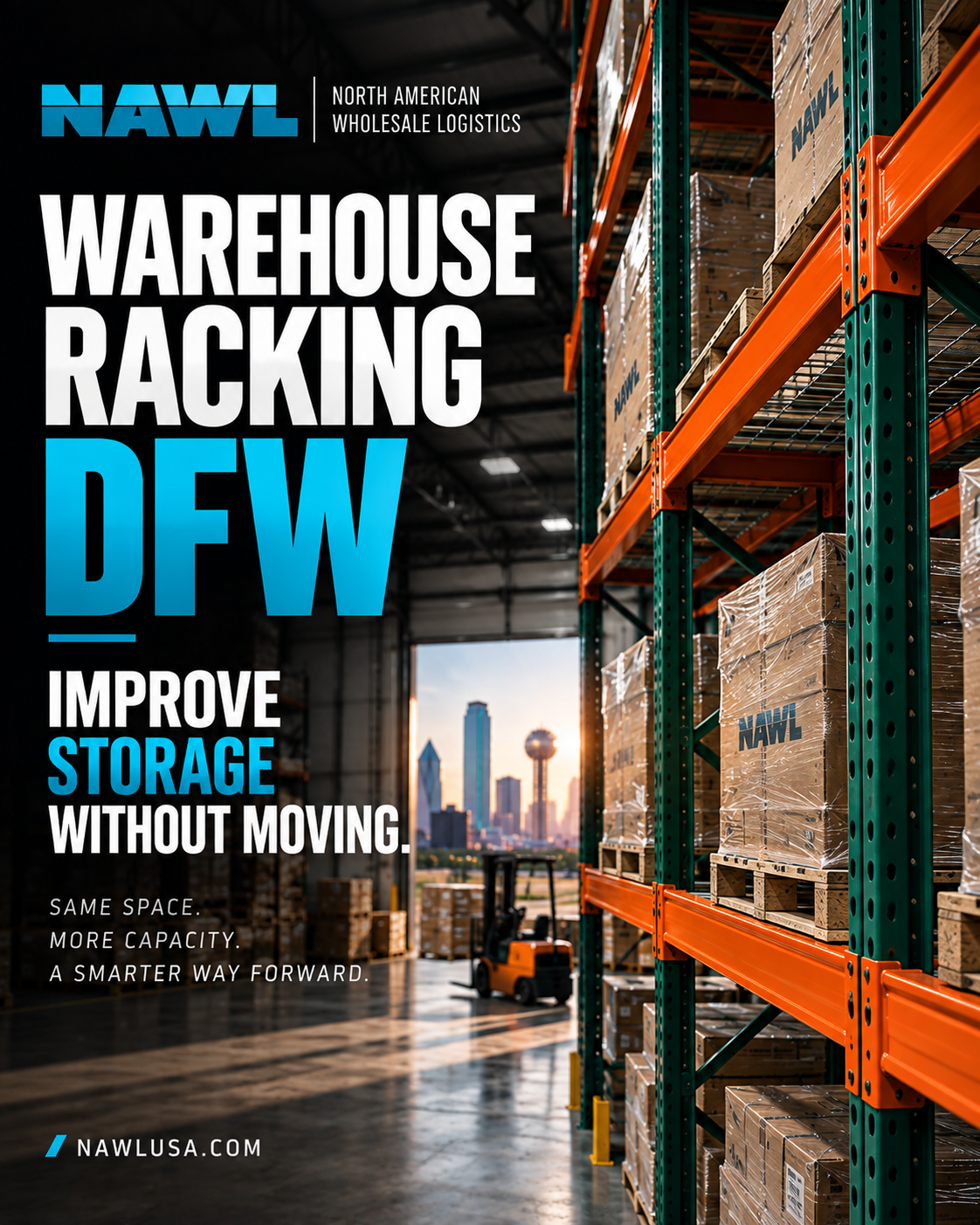
Every warehouse manager in the DFW Metroplex knows the challenge: you need more storage capacity, but moving to a larger facility isn't an option. High real estate costs, logistical disruption, and operational downtime make relocation a last resort. The good news is that for many operations, significant storage improvements are possible within your existing footprint. The key lies in optimizing your DFW warehouse racking strategy.
This article will detail practical approaches to increase storage density, improve material flow, and leverage your current space more effectively. We’ll discuss how strategic racking, smart layout design, and quick access to essential components can transform your DFW operations.
Rethink Your Vertical Cube: Go Up, Not Out
One of the most underutilized assets in many warehouses is vertical space. Before you consider expanding horizontally, look up. Most modern DFW warehouse racking systems are designed to reach considerable heights, allowing you to stack more inventory within your existing building envelope.
- Higher Bays: If your building structure and local fire codes permit, increasing the height of your pallet racks can dramatically boost storage capacity. This often involves using very-narrow-aisle (VNA) systems or specialized lift trucks that can reach higher elevations. While VNA requires specific equipment, the space savings can justify the investment, especially in high-volume operations.
- Multi-Level Racking Systems: For operations that combine palletized goods with hand-picked items or smaller components, multi-level racking or mezzanine systems can double or triple usable floor space. These integrated systems can incorporate shelving, conveyors, and even office space, creating a highly efficient vertical work cell.
- Structural Considerations: Always consult with a structural engineer and your DFW fire marshal before making significant changes to rack height or installing multi-level structures. Safety and compliance are paramount.
Optimize Beam Levels and Pallet Positions
Once you’ve addressed the overall height, the next step is to scrutinize your beam-level spacing. Often, racks are configured with excessive vertical space between beams, accommodating the tallest possible pallet. However, not all inventory requires this.
- Variable Beam Spacing: Analyze your inventory profiles. Can you create zones with different beam heights? For example, consolidate tall items into one area and then reduce beam spacing in other sections for shorter, more numerous SKUs. This allows you to add more beam levels—and therefore more pallet positions—in areas where product height permits.
- Flue Space Management: Ensure proper flue space is maintained for fire safety. While reducing beam height, you must still comply with national and local fire codes regarding clear vertical and horizontal spaces for sprinkler penetration. This is particularly critical in the Core DFW area, where fire safety regulations are strictly enforced.
- Load Analysis: Every adjustment to beam levels must consider the load-bearing capacity of the rack system. Overloading beams or uprights is a serious safety hazard. Always refer to your rack manufacturer’s load charts or consult with a qualified rack professional.
Strategic Aisle Planning and Layout Redesign
Warehouse layout is a dynamic element. What worked five years ago may not be optimal today. Re-evaluating your aisle configuration can unlock significant efficiencies and capacity.
- Narrower Aisles: The most common approach to increasing storage density is to narrow aisles. Standard aisles can be 10–12 feet wide. Moving to narrow aisles (8–10 feet) or very narrow aisles (VNA, 5–6 feet) significantly increases the storage footprint. This requires specialized forklifts (reach trucks, swing-mast trucks, or turret trucks) but can yield a 20–30% increase in pallet positions.
- One-Way Aisles: In high-traffic areas, implementing one-way aisles can reduce congestion and improve flow, indirectly increasing effective storage by speeding up material handling. This might also allow for slightly narrower aisles in some sections.
- Flow Rack and Push-Back Rack: For high-volume operations with fewer SKUs, consider dynamic storage systems like carton flow or pallet flow rack. These systems improve density and picking efficiency. Push-back rack is excellent for LIFO (last-in, first-out) inventory, offering high density by storing multiple pallets deep on inclined carts.
- Mezzanines and Pick Modules: For operations with a high volume of small, hand-picked items, integrating mezzanines or multi-level pick modules can separate picking from bulk storage, improving throughput and utilizing vertical space for active picking.
Leverage Quick-Ship Racking Components for Rapid Implementation
When optimizing your existing space, time is often of the essence. Sourcing and installing new DFW warehouse racking solutions efficiently is critical. This is where suppliers who offer quick-ship programs become invaluable.
- Availability: NAWL understands the urgency in the fast-paced DFW logistics environment. Our quick-ship programs for common rack components—including uprights, beams, and wire decking—mean less waiting and faster project completion.
- Minimizing Downtime: By having components readily available, you can implement changes incrementally or during off-peak hours, minimizing disruption to your daily operations. This ensures that your storage improvement project doesn't negatively impact your bottom line.
- Cost-Effectiveness: Waiting weeks or months for custom orders can inflate project costs due to prolonged labor or missed opportunities. Quick-ship options keep projects on schedule and within budget.
Conclusion: Smart Storage Is Strategic Storage
Expanding your storage capacity doesn't always mean expanding your facility. By strategically leveraging your vertical cube, optimizing beam levels, redesigning aisle layouts, and utilizing readily available DFW warehouse racking components, you can significantly enhance your warehouse's storage density and operational efficiency within its current footprint. In the competitive DFW market, every square foot counts.
Don't let perceived space limitations hinder your growth. Re-evaluate your existing setup with an expert eye. NAWL has decades of experience helping businesses like yours in the Core DFW area maximize their warehouse potential. Contact us today to discuss your specific needs and request a quote. Let's make your current space work harder for you. Request availability / Get a quote.
Ready to spec a system? Request a quote and our team will size it with you.