Lumber Yard Cantilever Layout for Minnesota Seasons
November 17, 2026
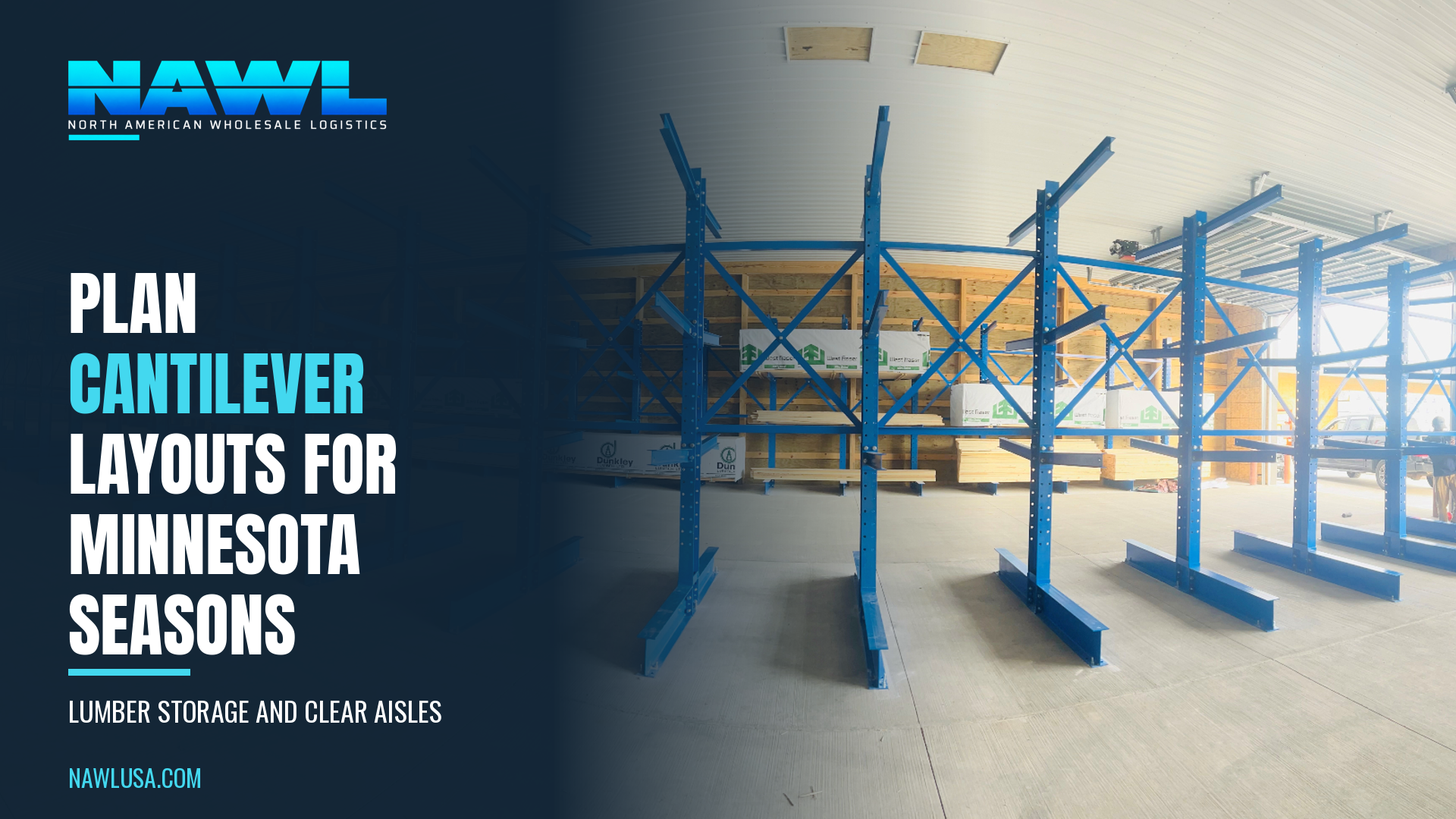
For a Minnesota lumber yard, use cantilever rack with 60-inch arms for wide bundles, set arm spacing so every bundle is supported along its length, keep the heaviest and wettest stock on low levels, and cover what you can. Plan aisles for your truck plus snow storage, because winter takes space and visibility.
Lumber is the classic cantilever material: long, awkward to palletize, and easy to load from the side. The details of layout decide whether the yard runs smoothly in January or jams up.
Why does lumber suit cantilever?
Cantilever arms leave the front open so you can slide bundles on and off from the aisle. Pallet rack beams would leave long boards unsupported between bays. Lumber also varies in length, so you can store mixed lengths on the same arms without custom compartments. See cantilever rack in Minneapolis for the basics of the system.
How should you choose arms and columns?
| Decision | Guideline |
|---|---|
| Arm length | 60-inch arms support wider bundles and carry 3,260 lbs each. 48-inch arms carry 2,640 lbs each and suit narrower stock |
| Column height | 12 ft columns for easy reach, 16 ft for more levels |
| Sides | Single-sided along a fence, double-sided in open yards |
| Finish | Galvanized for outdoor or covered yards |
Arm length
- Guideline
- 60-inch arms support wider bundles and carry 3,260 lbs each. 48-inch arms carry 2,640 lbs each and suit narrower stock
Column height
- Guideline
- 12 ft columns for easy reach, 16 ft for more levels
Sides
- Guideline
- Single-sided along a fence, double-sided in open yards
Finish
- Guideline
- Galvanized for outdoor or covered yards
Read 48-inch vs. 60-inch arms and 12-foot vs. 16-foot columns before choosing.
How do you space supports?
Boards sag if they are supported too far apart. Set column spacing so bundles rest on at least two supports and ideally three, with a modest overhang at each end. Shorter lengths can share supports with longer ones if the spacing is right. Ask your supplier to confirm spacing for the longest, thinnest stock you carry. See choosing arm length for your longest stock.
What about wet lumber and snow?
Water adds weight. Green or rained-on lumber can weigh noticeably more than dry stock, and snow on top adds more. Leave margin in your load check, and keep the heaviest loads low. Cover high-value stock where you can. See load placement on cantilever rack, planning a covered yard and snow and ice on outdoor cantilever arms.
How should you lay out the yard?
- Put fast-moving stock near the loading area
- Keep long, heavy items low and near the sideloader or forklift path
- Group by species or grade so crews learn where things are
- Leave a turning area at the end of each aisle
- Reserve snow storage space away from the rack face
- Mark aisles and levels clearly. See labeling and zoning a cantilever yard
For truck choices, see sideloader vs. forklift for cantilever yards and cantilever yard layout, traffic flow and snow removal.
What about the pad?
NAWL's product page calls for outdoor installs to anchor to a concrete pad at least 6 inches thick. Minnesota frost and soil conditions may require more, so have a local engineer confirm the design. See outdoor cantilever concrete pads and frost depth.
What about seasonal swings?
Lumber demand peaks in spring and summer. Plan for added capacity before the rush, so you are not unloading onto the ground. Standard sizes make it easy to add columns later. See expanding a cantilever system later and ordering cantilever in winter for a spring buildout.
How do you order?
Send your longest bundle, weights, yard dimensions and truck type. Stock items typically dispatch within 48 to 72 hours of ordering. NAWL supplies cantilever rack and components and does not install.
Frequently asked questions
Can I mix lengths on the same arms? Yes, if every bundle is supported properly along its length.
Should lumber rack be galvanized? Outdoors, usually yes.
How many levels do I need? Count bundle heights first, then check what your truck can reach.
Laying out a lumber yard?
Send your yard dimensions and lumber lengths, and we will quote stock cantilever for the layout.