Building Material Storage in Dallas
October 6, 2026
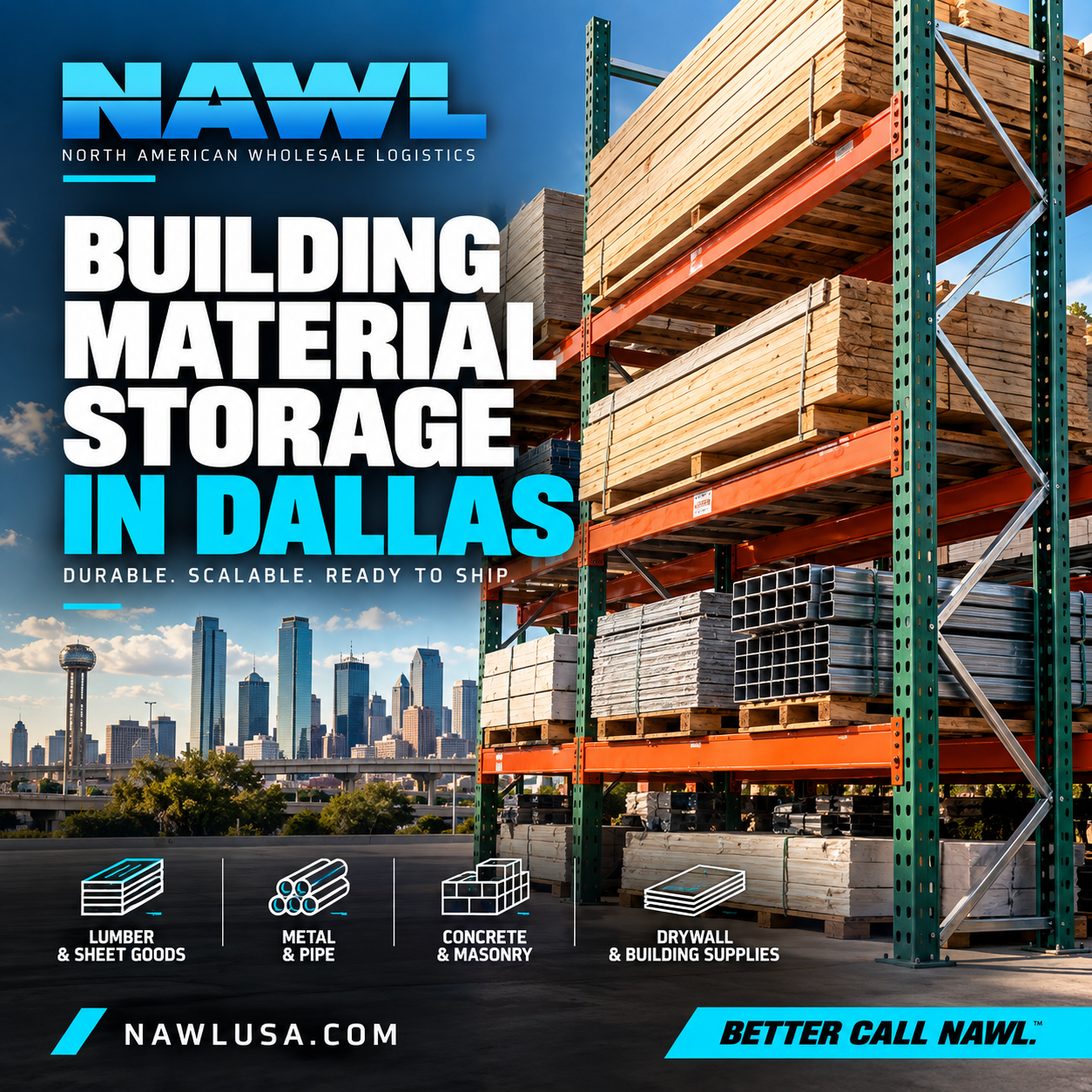
Operating a building material supply business in Dallas presents unique challenges. The sheer size and weight of lumber, rebar, drywall, and other construction materials demand robust, reliable, and intelligently designed storage solutions. Beyond the immediate need for space, your racking system directly impacts operational efficiency, safety, and, ultimately, your bottom line. This guide will walk you through critical considerations for optimizing your Dallas building material storage operations.
The Unique Demands of Building Material Storage in Dallas
Building materials are not uniform. They come in varying lengths, widths, weights, and fragility levels. This diversity means a one-size-fits-all approach to warehouse storage is not only inefficient but can also be dangerous. Consider the following categories:
- Long and Bulky Items: Lumber, pipes, rebar, and conduit require specialized cantilever racking or pigeonhole storage to prevent warping, improve accessibility, and maximize vertical space.
- Heavy Palletized Goods: Bags of concrete, drywall sheets, roofing shingles, and stone need heavy-duty selective pallet racking designed to handle significant loads per bay. Double-deep or drive-in racking can further increase density for high-volume SKUs.
- Odd-Shaped or Fragile Items: Fixtures, doors, windows, and certain insulation types may require custom shelving, carton flow, or even dedicated floor-level storage with proper dunnage to prevent damage.
Failing to account for these distinctions leads to wasted space, increased labor costs from inefficient handling, and higher rates of product damage—all eating into your profitability. Given the rapid pace of construction in Dallas, your storage system must support quick access and high throughput.
Key Selection Criteria for Building Material Racking
When evaluating warehouse storage systems for your Dallas facility, focus on these critical criteria:
Durability and Load Capacity
This is non-negotiable. Building materials are heavy. Your racking must be engineered to withstand the maximum expected loads, including potential dynamic forces from loading and unloading. Look for systems built from high-strength steel with appropriate gauge thickness. Ensure the manufacturer provides clear load ratings and that your design accounts for the heaviest items you'll store. Overloading a system is a recipe for catastrophic failure.
Accessibility and Inventory Management
How easily can your team access specific items? In a fast-paced environment, retrieval speed directly impacts customer service and labor efficiency. Options like selective pallet rack offer 100% SKU accessibility, ideal for diverse inventories. Cantilever rack provides unobstructed access to long items. Consider integration with your inventory management system (IMS) to ensure accurate tracking and minimize picking errors. The goal is to reduce search time and improve order fulfillment speed.
Safety Features
Safety is paramount. Your racking system must include features that protect both your inventory and your personnel. This includes robust base plates, proper anchoring, rack guards, row spacers, and sufficient aisle widths for material handling equipment. Training your staff on safe loading and unloading procedures is equally important. Compliance with local Dallas safety regulations and national standards is not just good practice; it's a legal requirement.
Customization and Scalability
Your business will grow, and your inventory needs will evolve. Can your chosen system adapt? Modular designs that allow for easy expansion or reconfiguration are highly beneficial. Think about adjustable beam levels, the ability to add new bays, or even integrate different types of racking within the same footprint. A system that can grow with your business helps future-proof your investment.
Practical Buying Considerations for Dallas Operations
Navigating the purchase process requires due diligence. Here are a few checks to perform:
Understand Your Current and Future Needs
Before you even look at a catalog, conduct a thorough analysis of your current inventory SKUs, their dimensions, weights, and turnover rates. Project future growth. How much square footage and cubic footage do you need? What are your peak season demands? A detailed needs assessment will prevent underspecifying or overspecifying your system.
Evaluate Material Handling Equipment (MHE) Compatibility
Your racking system must work seamlessly with your forklifts, order pickers, and other MHE. This means ensuring appropriate aisle widths, rack depths, and beam clearances. Consult with your material handling equipment provider early in the design process to avoid costly incompatibilities down the line.
Consider Installation and Permitting
Racking installation, especially for large-scale systems, is a specialized task. Ensure your provider offers professional installation services or can recommend qualified installers. Be aware of local Dallas building codes and permitting requirements for industrial racking systems. Proper permitting is crucial for safety and compliance.
Prioritize Total Cost of Ownership (TCO)
While initial purchase price is a factor, focus on the total cost of ownership. This includes the cost of the racking, freight, installation, maintenance, and potential future reconfigurations. A cheaper, less durable system might save money upfront but could lead to higher repair costs, product damage, and operational inefficiencies over its lifespan.
Optimizing Your Dallas Building Material Warehouse
Beyond the racking itself, consider these operational enhancements:
- Vertical Space Utilization: Dallas real estate is valuable. Don't waste vertical space. Maximize rack height within safe limits and consider very narrow aisle (VNA) systems where appropriate.
- Flow and Layout: Design your warehouse layout for logical product flow. Group similar items, place high-demand items closer to shipping, and minimize travel distances for material handlers.
- Technology Integration: Leverage warehouse management systems (WMS) for real-time inventory tracking, slotting optimization, and order picking efficiency. This is especially vital for the diverse inventory found in building material storage in Dallas.
Building material storage in Dallas requires a strategic approach. By prioritizing durability, accessibility, safety, and scalability, you can create a warehouse that efficiently supports your operations, protects your inventory, and contributes directly to your profitability.
Ready to optimize your building material storage? Contact NAWL for a quote on high-quality, durable racking solutions designed for the demands of the Dallas construction market. Our experts can help you design a system that meets your specific needs.
Ready to spec a system? Request a quote and our team will size it with you.