Cantilever Rack Bases & Columns
October 3, 2026
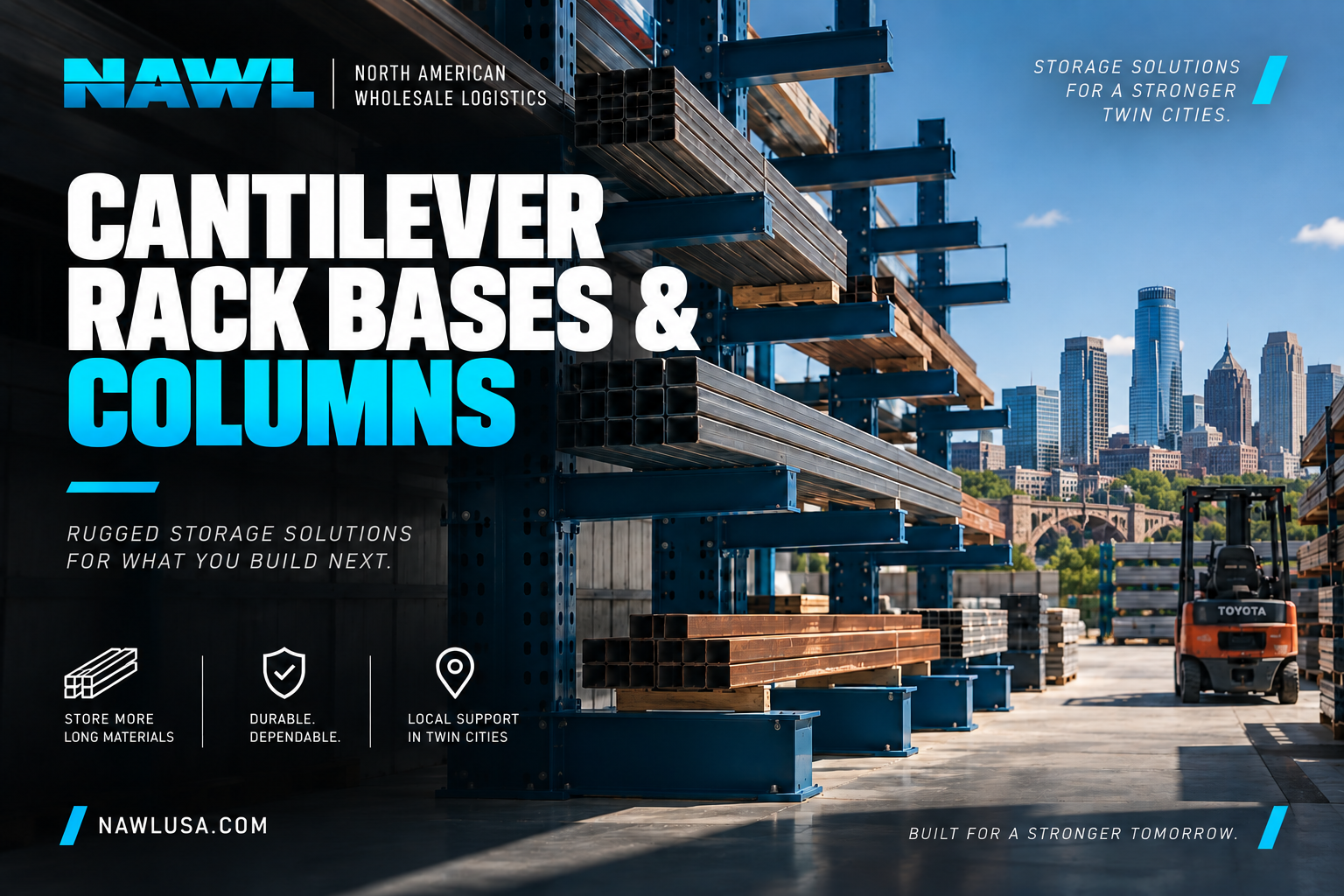
Cantilever rack bases (columns) are rated for capacity independent of arm capacity, and outdoor installs in Minnesota require footings set below the local frost line — typically 42 inches or more depending on county — to prevent frost heave from shifting the base over time. Indoor and covered-yard bases don't require frost-depth footings.
This is the single most important engineering difference between a cantilever system specified for Minnesota and one built off a generic national spec sheet. Get the footing wrong and a perfectly rated base can still fail — just slowly, over a few winters instead of all at once.
What are cantilever rack bases made of and how are they rated?
Bases are heavy steel columns, either single-sided (one row of arms) or double-sided (arms on both sides sharing the same column). Column capacity is an engineered rating based on steel gauge, column height, and base design — it's a separate number from arm capacity, and both need to be checked independently for any given load.
How deep do cantilever rack footings need to be for Minnesota's frost line?
Frost depth varies by how far north and how cold the local climate runs — it's not a single statewide number:
| Region | Approximate Frost Line Depth | Recommended Footing Depth |
|---|---|---|
| Twin Cities Metro | 40–48 in | 42–48 in |
| St. Cloud | 45–52 in | 48–54 in |
| Rochester | 42–48 in | 44–50 in |
| Duluth | 55–65 in | 60–66 in |
Twin Cities Metro
- Approximate Frost Line Depth
- 40–48 in
- Recommended Footing Depth
- 42–48 in
St. Cloud
- Approximate Frost Line Depth
- 45–52 in
- Recommended Footing Depth
- 48–54 in
Rochester
- Approximate Frost Line Depth
- 42–48 in
- Recommended Footing Depth
- 44–50 in
Duluth
- Approximate Frost Line Depth
- 55–65 in
- Recommended Footing Depth
- 60–66 in
Duluth's footings need to go noticeably deeper than the Twin Cities metro — a supplier quoting the same footing depth everywhere in the state is likely underbuilding for the northern part of our service area. Shallow footings don't fail catastrophically; they let the base gradually shift out of plumb over repeated freeze-thaw cycles, which can go unnoticed until an inspection or a load-handling problem calls attention to it.
How do I match replacement bases to an existing cantilever system?
Confirm three things before ordering a replacement or add-on base:
- Column height and depth — measure the existing base directly rather than assuming a standard size
- Mounting bracket pattern — arms need to physically match the base's connection style
- Footing condition — if you're replacing a base that failed prematurely, check whether the original footing was actually set to proper frost depth before assuming the base itself was defective
Indoor vs. outdoor base specification
Indoor and covered-yard bases skip the frost-footing requirement entirely, since there's no exposed ground to freeze around the footing. This is one reason covered or indoor cantilever installs are simpler and faster to schedule than open outdoor yards, especially in winter — see our quick-ship program for how this affects delivery timing.
Frequently asked questions
Can an existing outdoor system be retrofitted with deeper footings? Yes, though it typically requires excavating and repouring the footing rather than a simple add-on fix — we can assess this during a site visit.
Does a taller column need a deeper footing? Generally yes — taller, more heavily loaded columns put more leverage on the footing, so footing depth and column height should be specified together, not independently.
How does this affect the installation timeline? See our cantilever installation guide for the full step-by-step process, including footing excavation and cure time.
Ready to get a quote?
Get pricing on cantilever bases and footings engineered for your specific location's frost depth.
Request a Base and Footing Quote →