Cantilever Rack Installation Guide
October 20, 2026
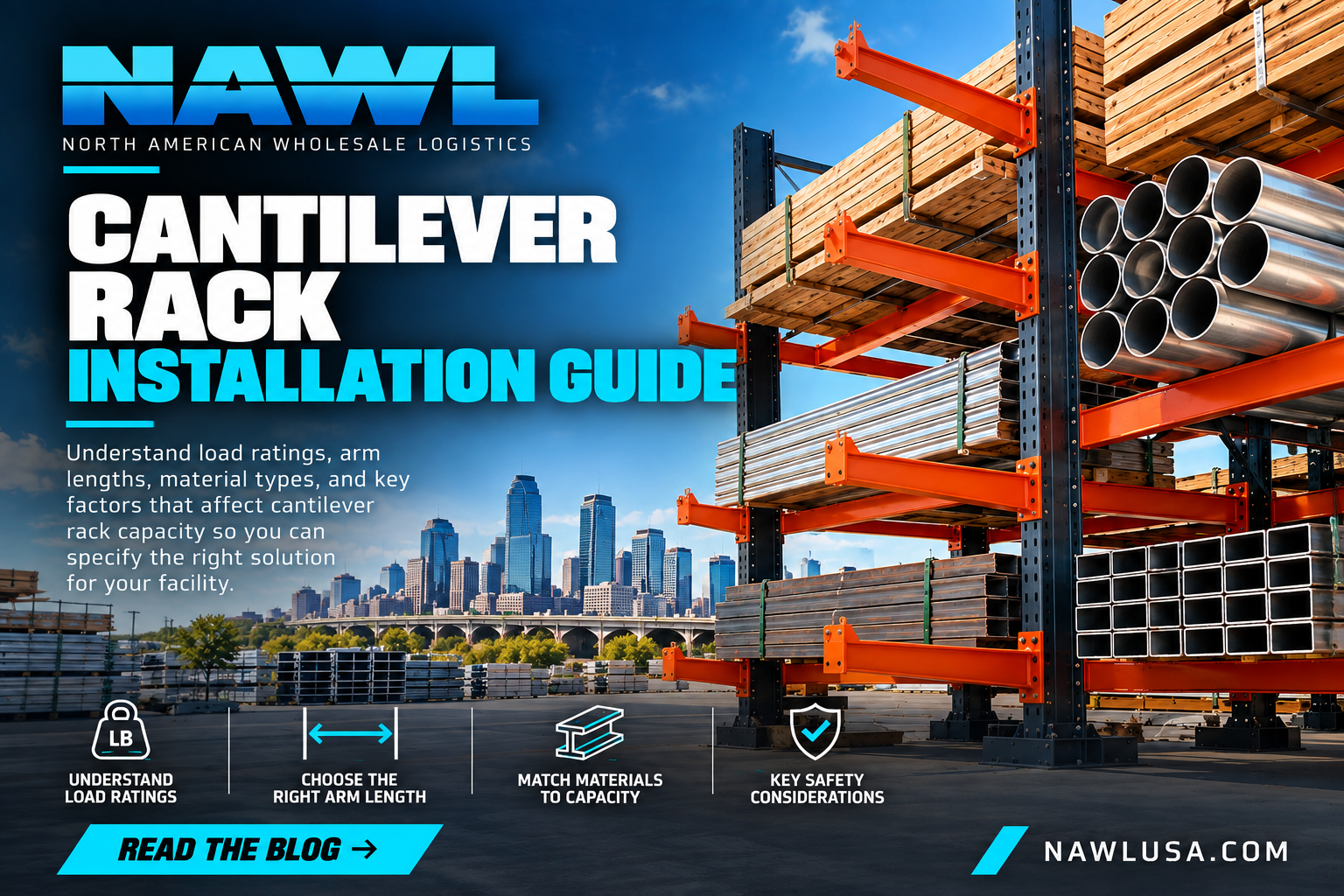
Cantilever rack installation follows layout marking, footing excavation below the local frost line, concrete cure time, column/base anchoring, arm installation with bracket engagement confirmed, and a final load inspection. Frozen ground and concrete cure time in cold weather can extend installation timelines for outdoor systems during Minnesota winters.
An installation guide that doesn't mention frost-depth footings or cold-weather concrete cure time wasn't written for Minnesota — those two steps are the most commonly skipped on outdoor cantilever installs here.
What are the steps to install cantilever racking correctly in Minnesota?
- Mark layout per the approved drawing, confirming column spacing and aisle clearance
- Excavate footings below the local frost line for your specific area — see our footing depth by region reference for exact numbers
- Pour and cure concrete footings, allowing extended cure time in cold weather before loading the footing
- Set and anchor columns/bases to the cured footings
- Install arms and confirm bracket engagement is fully seated and secure
- Install snow/wind bracing on any covered or canopy structures
- Conduct a final load and safety inspection before putting the system into service
Steps 2, 3, and 6 don't appear in a warm-climate installation guide — they're specific to outdoor cold-climate installations.
Why does footing excavation depth matter more for cantilever racking in cold climates?
A footing that isn't set below the frost line is exposed to the ground's annual freeze-thaw cycle, which can gradually push and shift it over successive winters — even when the column and arms above it are correctly rated for the load. This is a slow-developing risk rather than an immediate failure, which is exactly why it's easy to skip during a rushed install and only discover years later. See our snow load and bracing requirements guide for the full regional frost-depth data.
Can cantilever racking be installed during a Minnesota winter?
It depends on the install type. Indoor and covered-yard installs proceed on a normal schedule year-round — there's no exposed footing work involved. Open outdoor yard installs are a different story: frozen ground makes excavation slower and sometimes requires specialized equipment, and poured concrete needs longer cure time in cold temperatures before it's ready to bear load. We're upfront about this rather than promising the same timeline in January that we'd offer in July — see our 72-hour shipping guarantee for exactly how this affects our SLA.
Common installation mistakes to avoid
- Insufficient footing depth — using a generic or southern-climate footing spec instead of the correct depth for your specific Minnesota location
- Skipped cure time — loading a footing before concrete has properly cured in cold weather
- Mismatched arm brackets — installing arms that don't fully seat into the base's mounting pattern, common when mixing components from different sources
Frequently asked questions
Do I need a permit for an outdoor cantilever installation? Requirements vary by municipality — check with your local building department, and we can help provide the engineering documentation typically required.
What's the best season to schedule an outdoor install? Spring through fall avoids frozen-ground excavation delays; winter installs are still possible but should be planned with the extended timeline in mind.
Where can I find the recommended footing depth for my specific city? See our snow load and bracing requirements guide for a region-by-region breakdown.
Ready for a professional installation?
Request a professional installation quote for your cantilever racking project, scheduled correctly for Minnesota's climate.
Request a Professional Installation Quote →