Cantilever Rack Arms
October 2, 2026
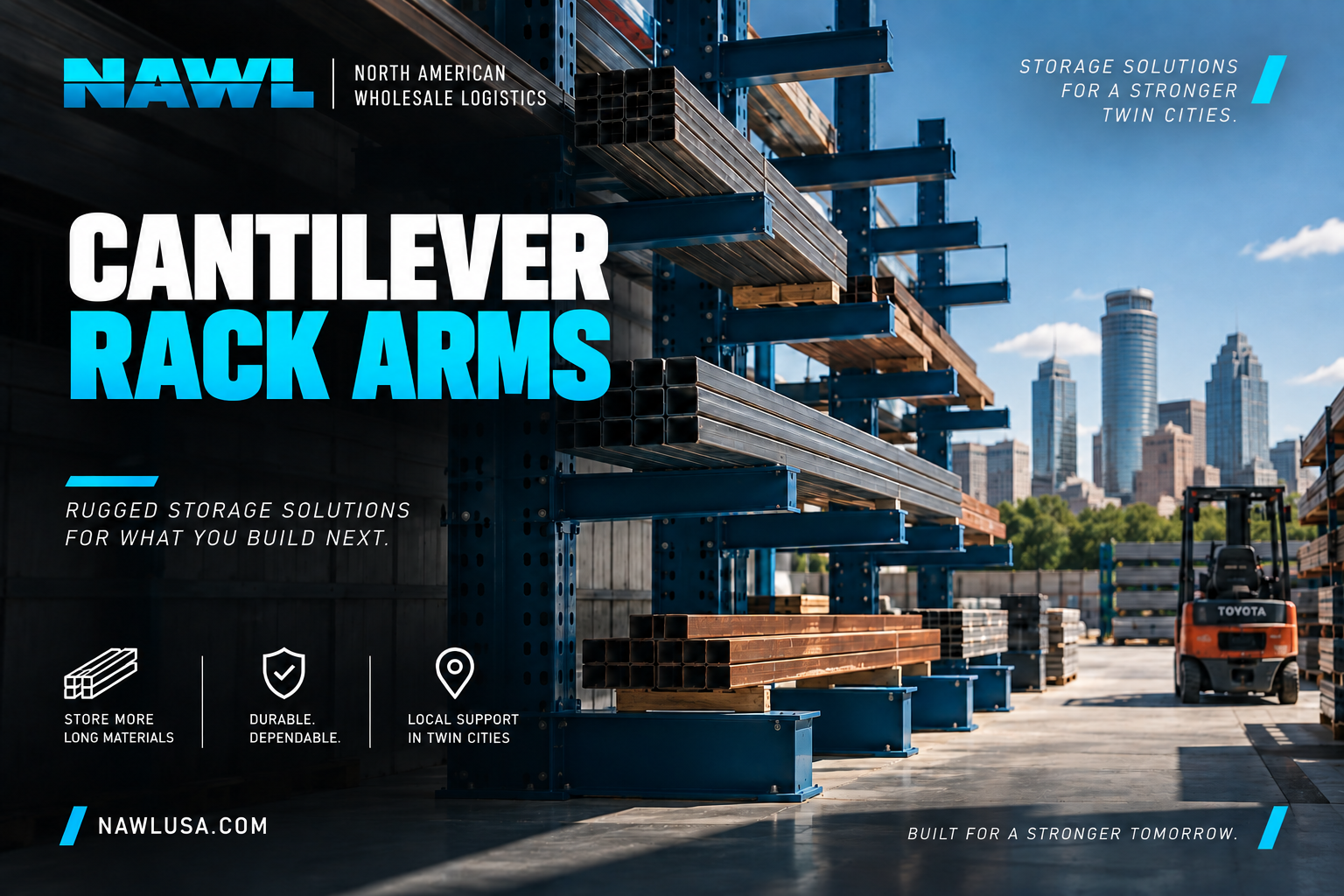
Cantilever rack arm capacity typically ranges from 1,500 to 6,000+ lbs depending on arm length and gauge, rated independently of the base/column. Deck arms support smaller or loose items with a flat surface; no-deck arms suit long stock like pipe or lumber that rests directly across arms. Matching replacements requires confirming both arm length and the base's mounting bracket pattern.
Whether you're replacing a bent arm or specifying a new system, the arm itself carries its own capacity rating separate from the base it's mounted on — mixing that up is one of the most common overload mistakes we see.
How much weight can a cantilever rack arm hold?
Capacity depends on arm length and steel gauge, not on how strong the base looks:
| Arm Length | Capacity (lbs) | Deck/No-Deck | Recommended Coating (Outdoor/Indoor) |
|---|---|---|---|
| 4 ft | 1,500–2,500 | Either | Galvanized (outdoor) / painted (indoor) |
| 6 ft | 2,000–3,500 | Either | Galvanized (outdoor) / painted (indoor) |
| 8 ft | 2,500–4,500 | Typically no-deck | Galvanized (outdoor) / painted (indoor) |
| 10+ ft | 3,000–6,000+ | No-deck | Galvanized (outdoor) / painted (indoor) |
4 ft
- Capacity (lbs)
- 1,500–2,500
- Deck/No-Deck
- Either
- Recommended Coating (Outdoor/Indoor)
- Galvanized (outdoor) / painted (indoor)
6 ft
- Capacity (lbs)
- 2,000–3,500
- Deck/No-Deck
- Either
- Recommended Coating (Outdoor/Indoor)
- Galvanized (outdoor) / painted (indoor)
8 ft
- Capacity (lbs)
- 2,500–4,500
- Deck/No-Deck
- Typically no-deck
- Recommended Coating (Outdoor/Indoor)
- Galvanized (outdoor) / painted (indoor)
10+ ft
- Capacity (lbs)
- 3,000–6,000+
- Deck/No-Deck
- No-deck
- Recommended Coating (Outdoor/Indoor)
- Galvanized (outdoor) / painted (indoor)
A base rated for high total capacity doesn't mean every arm mounted on it is rated the same — each arm has its own independent rating, and overloading one arm can be a real risk even when the base itself is fine.
What's the difference between deck and no-deck cantilever arms?
- Deck arms have a flat surface (often a small platform or grate) between or along the arm, useful for smaller items, loose material, or anything that could roll or shift on a bare arm.
- No-deck arms are just the structural arm itself — the standard choice for long stock like pipe, lumber, or tubing that rests directly across two or more arms.
Most Minnesota lumber and pipe applications use no-deck arms; deck arms show up more often for mixed or irregular loads.
How do I find replacement arms that match my existing cantilever bases?
Two things need to match: the arm length itself, and the mounting bracket pattern on the base. Unlike pallet racking's fairly standardized teardrop hole pattern, cantilever bracket patterns vary more by manufacturer — a common source of mismatched used-equipment purchases. Before ordering replacements:
- Measure the existing arm length and note the approximate load it's currently rated for
- Identify the bracket/mounting style on the base (bolt pattern, weld style, or pin-style connection)
- If the original manufacturer is unknown or the system is older, we can help verify compatibility before you order
Outdoor coating considerations
Arms exposed to Minnesota weather should use galvanized or otherwise corrosion-resistant coating rather than standard painted finish — condensation and freeze-thaw cycling accelerate rust on painted steel left outdoors. See our snow load and bracing requirements guide for the broader climate-engineering picture.
Frequently asked questions
What are common signs of arm damage? Visible bending, especially near the base connection, or a load that no longer sits level are both signs an arm needs replacement, not just monitoring.
Can I use a single arm per level instead of a pair? Some configurations use single arms per level depending on base design — check your specific system before assuming.
Where do I find full system capacity, not just arm capacity? See our cantilever capacity chart for arm and column capacity together.
Ready to get a quote?
Get pricing on replacement or new cantilever arms sized and coated for Minnesota's climate.