Pipe Storage Rack in Fort Worth: Cantilever Planning
November 3, 2026
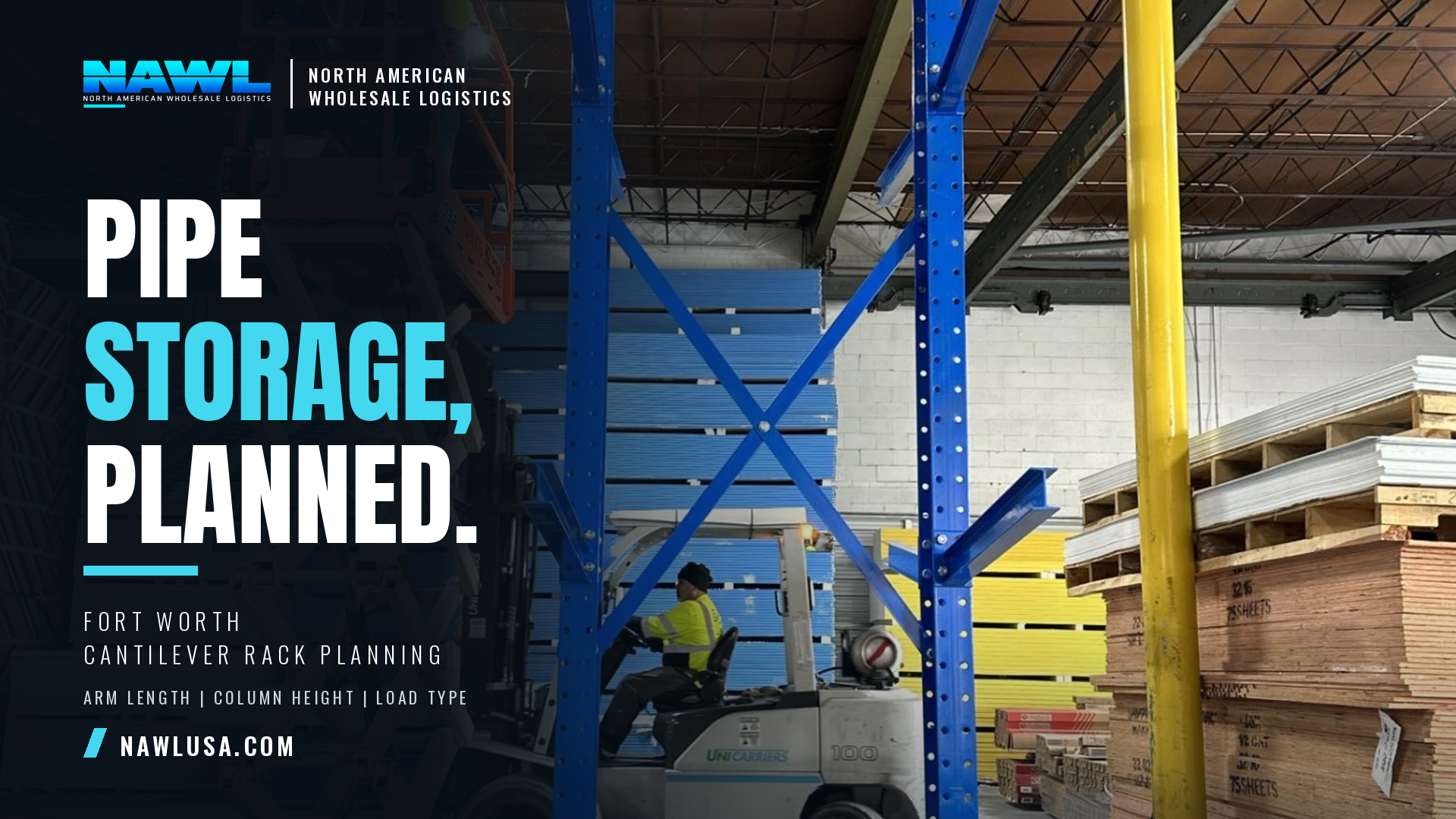
Storing long, bulky materials like pipe, tubing, or lumber presents unique challenges in any warehouse. Traditional selective pallet racking falls short, often leading to wasted space, safety hazards, and inefficient material handling. For operations in Fort Worth dealing with such inventory, cantilever rack systems are the definitive solution. However, simply installing cantilever racks isn't enough; effective planning is crucial for maximizing their benefits. This guide provides essential tips for designing and implementing a robust pipe storage rack solution in Fort Worth.
The Core Problem: Inefficient Long Material Storage
Many warehouses, especially those growing organically, find themselves wrestling with unwieldy inventory. Pipes, conduits, and other elongated items often end up stacked on the floor, leaning against walls, or precariously balanced on unsuitable racking. This leads to several problems:
- Safety Hazards: Unsecured long materials are prone to shifting, rolling, or toppling, posing a significant risk to personnel and other equipment.
- Wasted Space: Floor stacking consumes valuable horizontal space and limits vertical storage potential. It also obstructs aisles and makes inventory difficult to access.
- Product Damage: Materials can be scratched, dented, or bent when improperly stored, leading to costly write-offs.
- Inefficient Operations: Locating and retrieving specific lengths or types of pipe becomes a time-consuming, labor-intensive process, impacting throughput and increasing operational costs.
Cantilever racking directly addresses these issues by providing clear, unobstructed access to materials from the front, maximizing vertical density, and ensuring secure storage.
Key Considerations for Cantilever Rack Selection
Choosing the right cantilever system for your Fort Worth facility requires careful thought. Here's what you need to evaluate:
Material Characteristics
- Length: This dictates the arm length and bay width. Standard arms range from 24 to 60 inches. You'll need sufficient overhang to prevent material from sagging or slipping.
- Weight: The weight of your heaviest pipe bundle or individual piece will determine the required capacity per arm and per upright. Over-specifying is safer than under-specifying, but avoid unnecessary costs.
- Diameter/Bundle Size: This affects the clear vertical space needed between arms. Ensure enough room for safe loading and unloading without damaging adjacent materials.
- Quantity/Density: How many linear feet or bundles of each type do you need to store? This informs the overall footprint and number of bays required.
Facility Layout and Flow
- Available Footprint: Measure the exact area where the racks will be installed. Account for column obstructions, emergency exits, and other fixed structures.
- Aisle Width: Consider the type of material handling equipment (e.g., forklift, side loader, overhead crane) you'll use. Aisle width must accommodate the equipment plus the longest material being handled, ensuring safe maneuvering.
- Ceiling Height: Maximize vertical storage by utilizing your available clear height. Taller uprights increase storage density.
- Loading/Unloading Zones: Plan the rack layout to optimize the flow of materials in and out of storage. Minimize travel distances and bottlenecks.
Environmental Factors
- Indoor vs. Outdoor: While most pipe storage rack applications in Fort Worth are indoors, outdoor storage requires galvanized or specially coated systems to resist corrosion from weather exposure.
- Temperature & Humidity: Extreme conditions can affect material integrity and the rack's coating. Ensure your chosen system is appropriate for the environment.
Essential Buyer Checks for Your Fort Worth Operation
Once you have a handle on your material and facility requirements, conduct these checks before finalizing your cantilever rack purchase:
Rack Components and Quality
- Upright Design: Cantilever uprights can be single-sided (against a wall) or double-sided (accessible from both aisles). A double-sided system offers greater density per footprint. Look for robust H-beam or structural channel construction.
- Arm Configuration: Arms should be adjustable on close centers (e.g., 3-inch increments) for flexibility. Some arms feature a slight upward pitch to prevent material from rolling off. Ensure arms are securely bolted or pinned to the uprights.
- Bracing: Cross-bracing and horizontal bracing provide longitudinal stability. Ensure adequate bracing for the upright height and load capacity.
- Base Plates: Large, sturdy base plates are critical for distributing the load evenly and anchoring the uprights securely to the floor.
- Capacity Ratings: Verify that each component (arm, upright, base) has a clearly defined load capacity. Ensure the combined capacity meets or exceeds your heaviest anticipated loads with a safety factor.
Installation and Future Growth
- Professional Installation: Cantilever racks are structural components. Professional installation ensures safety, stability, and compliance with local building codes in Fort Worth. NAWL partners with experienced installers.
- Floor Anchoring: Proper anchoring is non-negotiable. The floor must be able to support the rack's weight and the applied loads. Discuss floor requirements with your supplier.
- Scalability: Consider your future storage needs. Can the system be easily expanded by adding more bays or taller uprights? Modularity is a key benefit of cantilever racks.
- Safety Accessories: Ask about optional accessories like end stops, safety pins, or decking to further secure materials and prevent them from falling off.
Supplier Support and Services
- Engineering Expertise: A reputable supplier like NAWL can provide engineering calculations and layout designs tailored to your specific needs. This is critical for complex industrial applications.
- Permitting: Understand what local permits may be required for rack installation in Fort Worth and how your supplier can assist with documentation.
- Lead Times and Availability: In today's market, lead times can vary significantly. Inquire about quick-ship options or standard lead times for your desired configuration. NAWL maintains inventory to support rapid deployment.
Conclusion: Build a Foundation for Efficiency
Implementing a well-planned cantilever pipe storage rack system is an investment that pays dividends in safety, efficiency, and space utilization for Fort Worth warehouses. By meticulously considering your materials, facility, and the quality of the system, you can develop a storage solution that streamlines your operations and supports your growth.
Ready to optimize your long material storage? Contact NAWL today to discuss your specific requirements and get a quote for a custom cantilever rack solution.